
High-Spec Industrial Luminaires for the Dutch Market
Engineered to satisfy stringent NEN-EN 12464-1 workspace standards, BREEAM-NL certification metrics, and low-energy CSRD benchmarks across industrial and horticultural sites.
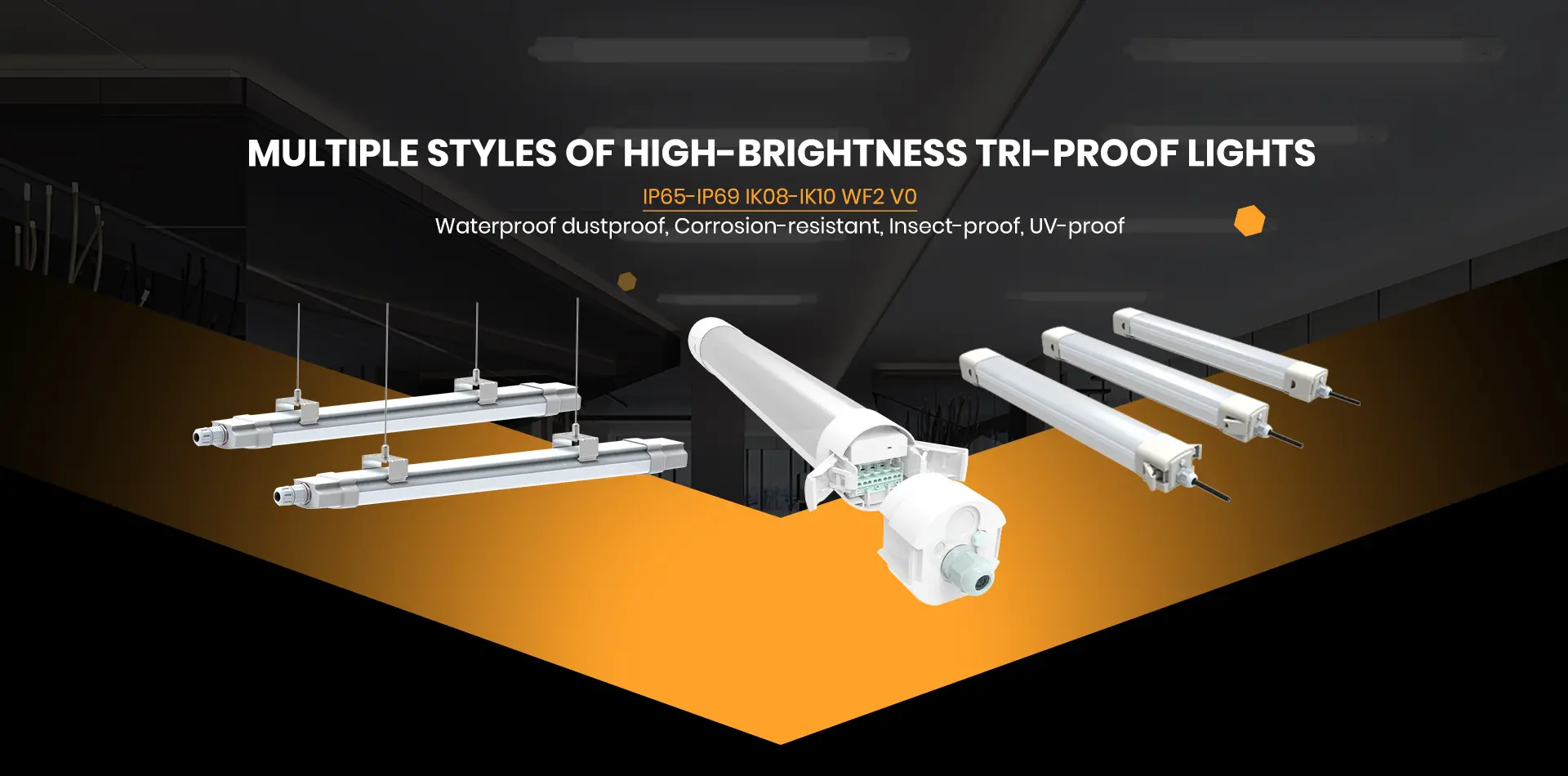
LED Tri-Proof Light
Impervious to moisture, dust, and corrosive vapors. Tailored for Dutch agricultural sorting sheds, automated car parking garages, and Westland cold stores.
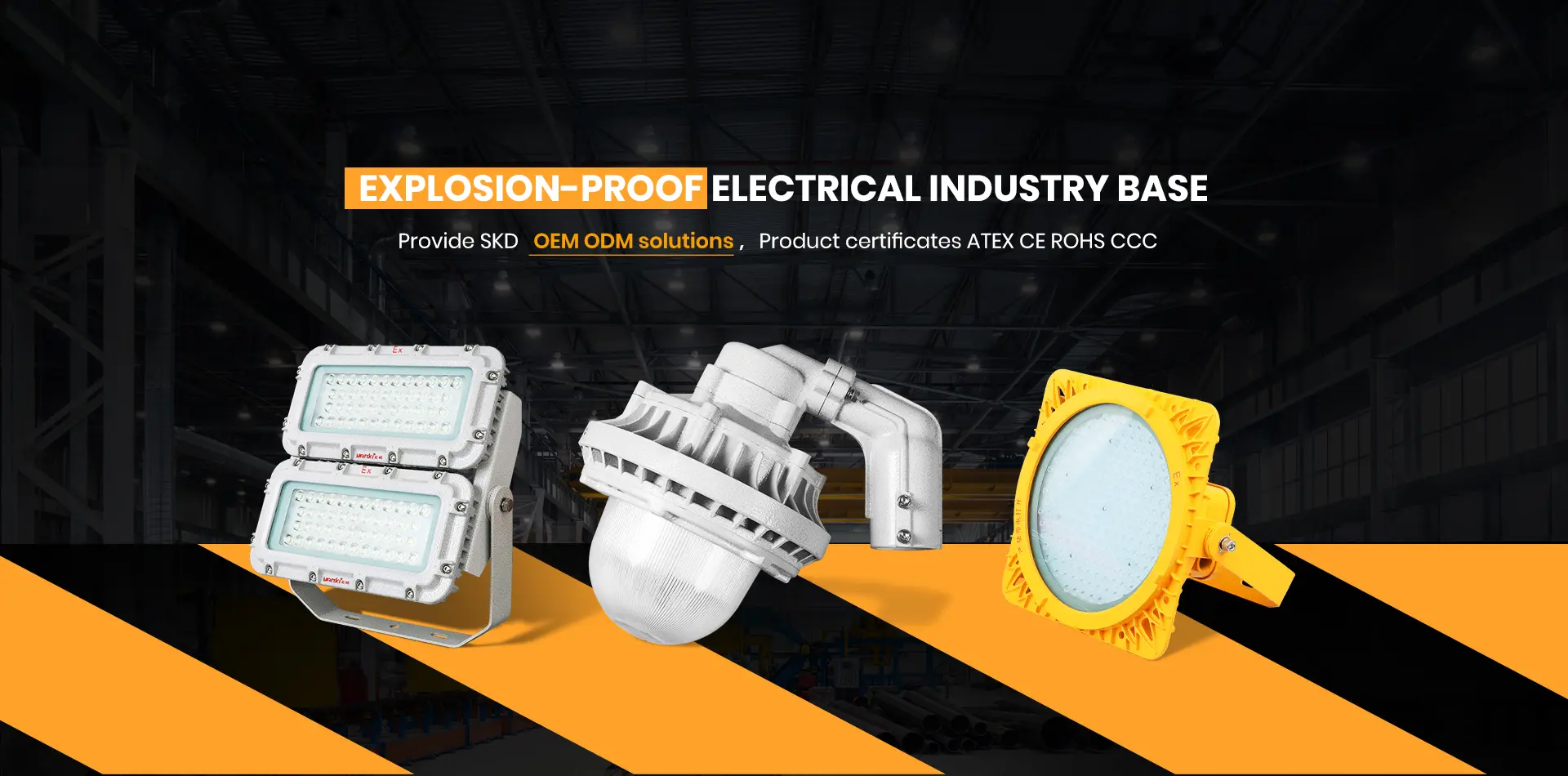
LED Explosion-Proof Light
Heavy-duty marine-grade enclosures engineered for the petrochemical clusters of Rotterdam-Europoort, offshore logistics, and grain flour handling.
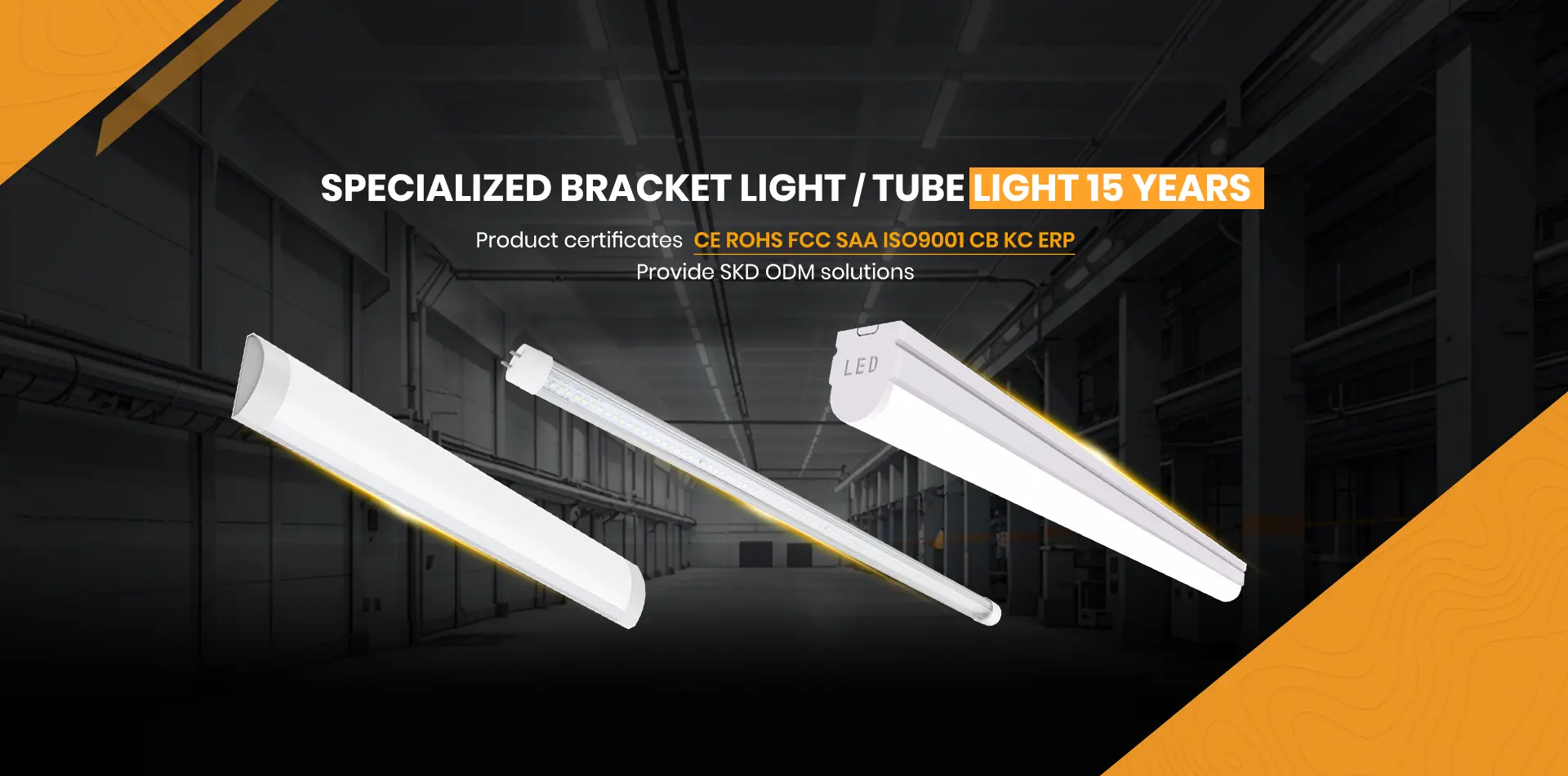
LED Stent Lamp (Batten)
Continuous linear architectural and utility batten fixtures. Designed for rapid daisy-chain retrofits in retail distribution hubs, workshops, and educational sites.
Intelligent Dimming Sensor Light
Integrated microwave doppler sensing and ambient daylight harvesting. Reduces idle electricity drain by up to 82% in massive Dutch logistics hubs.
The Netherlands Industrial Lighting Transition: Energy Tax, ESG & Smart Infrastructure
A comprehensive examination of statutory frameworks, high grid-capacity constraints, and the urgent shift toward automated luminaire intelligence across the Low Countries.
Grid Congestion & EIA Tax Relief
With TenneT reporting structural grid congestion (netcongestie) across Noord-Brabant, Gelderland, and South Holland, Dutch facilities face strict peak-load caps. Luminaires equipped with dynamic microwave dimming qualify for the Dutch Energie-investeringsaftrek (EIA) tax incentive, allowing corporate buyers to deduct up to 40% of installation costs from taxable profit while easing local transformer loads.
EPBD IV & CSRD Mandatory Compliance
Under the revised EU Energy Performance of Buildings Directive (EPBD) and Corporate Sustainability Reporting Directive (CSRD), Dutch commercial asset owners must document absolute Scope 2 carbon reductions. Static fluorescent and non-dimmable LED systems are disqualified from class-A energy labels (Energielabel A++++), requiring autonomous smart sensor luminaires with precise occupancy logging.
Extreme Ambient Moisture & Ammonia
The Netherlands houses over 10,000 hectares of high-tech greenhouse glasshouses (Greenport West-Holland, Venlo) and deep cold storage facilities. Luminaires must endure 95% relative humidity, chemical fertilizer vapor, pesticide spraying, and condensation cycles without seal degradation or sensor false-triggering caused by thermal heat pumps.
| Evaluation Parameter | Conventional Industrial Lighting | Basic Automated PIR Systems | Scoden Intelligent Dimming Sensor Lights | Dutch Regulatory Benchmark |
|---|---|---|---|---|
| Luminous Efficacy | 85 – 100 lm/W (Fluorescent/Legacy) | 120 – 135 lm/W (Static LED) | 150 – 175 lm/W (SMD 2835 Pro) | EIA Scheme: ≥ 140 lm/W |
| Standby Power Consumption | 100% Constant (No Dimming) | 0.8W – 1.5W per sensor head | ≤ 0.25W Ultra-low standby | NEN-EN 15193-1 Parasitic Limit |
| Detection Methodology | Manual wall switches / Timers | Passive Infrared (PIR - line of sight) | 5.8GHz High-Frequency Doppler Radar | No dead-zone coverage (NEN 12464) |
| Dimming Modulation | None (Binary On/Off) | Step Relay (Shock cycling) | DALI-2 / 0-10V Smooth Micro-Step | Flicker-Free (PstLM ≤ 1.0, SVM ≤ 0.4) |
| Operating Temperature | -10°C to +35°C | -15°C to +40°C | -35°C to +55°C (Cold-chain verified) | HACCP / Food Safety Class |
| Estimated TCO Payback | Baseline benchmark | 2.8 – 3.4 Years | 1.1 – 1.6 Years (Dutch kWh Tariffs) | BREEAM-NL Hea-01 Compliance |
Global Enterprise Sourcing Architecture: Beyond Basic Lumens
Enterprise procurement managers, lighting design consultancies, and electrical wholesalers across Western Europe evaluate smart lighting on four core operational vectors.
1. LCC & Lifecycle Lumen Depreciation
Global contracts demand LM-80 and TM-21 validated test records indicating L80B10 > 54,000 hours. In high-ceiling logistics racks (12m+), the cost of scissor-lift downtime and electrician labor far outweighs the luminaire unit price.
2. Adaptive Micro-Motion Detection
Standard PIR sensors fail to detect stationary order-pickers or low-vibration automated guided vehicles (AGVs). Enterprise RFQs specify 5.8 GHz C-band radar with configurable hold times, twilight lux thresholds, and bi-level dimming (10% to 100%).
3. Protocol Interoperability & Mesh
Integration readiness with building management systems (BMS) via DALI-2 (IEC 62386 standard), 0-10V, or decentralized Bluetooth SIG Mesh. Eliminating single-vendor proprietary lockout protects the asset lifecycle for over 15 years.
4. Traceable In-House Validation
Tier-1 contractors reject trading intermediaries without in-house verification. Complete IES / LDT photometric distribution data, hi-pot dielectric tests, and calibrated IP6X dust/water chamber reports must accompany every project bill of materials.
Yueqing Electrical Capital: Unmatched Supply Chain Agility
Situated in Beibaixiang Town, Yueqing, Zhejiang—widely recognized as China’s premier electrical and lighting manufacturing cluster—Zhejiang Skodan Lighting Co., Ltd. (Scoden Lighting) integrates localized vertical raw material synthesis with advanced digital factory operations.
By maintaining deep supplier networks within a 15-kilometer radius—ranging from precision tooling and polycarbonate extrusion to SMT high-speed pick-and-place lines—we provide European procurement partners with accelerated prototyping, reliable component availability, and extreme cost containment free from intermediary markups.
Yueqing Facility Quality Control Workflow
- SMT Driver & Board Depaneling: Automated surface-mount technology utilizing high-reliability Nichia/San'an LED dies with CRI > 80 / CRI > 90 and strict MacAdam 3-step color consistency.
- Automated CNC Housing Machining: Heavy-gauge ADC12 aluminum casting and UV-stabilized Bayer polycarbonate extrusions for IP66 seal integrity and IK08/IK10 impact resistance.
- Full-Load Burn-In & Sensor Calibration: 100% 4-hour dynamic thermal burn-in under nominal and high-voltage conditions with automated microwave sensitivity tuning.
- Darkroom Photometric Characterization: In-house Type-C goniophotometer generating accurate IES and EULUMDAT (.ldt) photometric curves for Dialux and Relux design studies.
High-Impact Dutch Application Scenarios
Engineered to solve thermal, atmospheric, and regulatory challenges across prime industrial sectors in the Netherlands.
High-Bay Automated Logistics (Venlo & Tilburg)
Dutch logistics corridors operate 24/7 with narrow-aisle racking (10m–14m high). Human presence in any specific aisle is often lower than 15% of the shift. By deploying Scoden linear intelligent dimming battens with high-frequency microwave sensors, fixtures idle at an energy-saving 10% standby (150 lux guideline), ramping seamlessly to 100% (300 lux) within 0.2 seconds upon forklift or AGV entry.
Petrochemical & Maritime Docks (Port of Rotterdam)
Harsh North Sea salt-mist atmospheres combined with flammable hydrocarbon vapors (Zone 1 / Zone 2 environments) necessitate explosion-proof luminaires. Scoden copper-free aluminum floodlights with anti-corrosive powder coating and silicone sealing rings prevent vapor penetration while dissipating thermal load effectively, maintaining T6 surface temperature limits.
Agri-Cold Chains & Greenhouse Corridors (Westland)
In chilled storage facilities operating between -25°C and +4°C, traditional fluorescent tubes suffer from severe lumen drop and slow startup. Scoden tri-proof sensor fixtures maintain high efficacy across freezing conditions, employing internal breathing valves to eliminate moisture suction during rapid temperature cycling.
5.8GHz Microwave Doppler vs. PIR: Selecting the Optimal Sensor Engine
A definitive engineering breakdown for specification engineers, preventing false triggers and maximizing real-world power reduction.
High-Frequency 5.8GHz Microwave Radar
Operating Principle: Emits an ultra-low power electromagnetic signal (5.8 GHz) and analyzes frequency shifts in the reflected echo caused by motion (Doppler effect).
- Thermal Invariance: Completely immune to ambient temperature fluctuations. Maintains 100% detection accuracy in -25°C blast freezers or hot injection molding shops.
- Enclosed Integration: Mounts inside the sealed IP66 polycarbonate housing; no external sensor lens exposed to dust, acid steam, or high-pressure water cleaning.
- Penetrative Detection: Capable of detecting movement through thin plastics, glass, and partition walls—ideal for pre-illuminating warehouse aisle entrances.
Passive Infrared (PIR) Dual-Pyros
Operating Principle: Detects changes in thermal infrared radiation emitted by human bodies or warm machinery moving across optical Fresnel zones.
- Line-of-Sight Constraint: Requires a exposed external lens directly exposed to ambient air. Contamination with oil mist or industrial dust diminishes sensitivity.
- Thermal Saturation Vulnerability: When ambient temperatures approach human body temperature (32°C–36°C), detection sensitivity drops sharply.
- Application Sweet Spot: Ideal for compact mechanical utility rooms or open-air loading docks where strong windblown foliage might cause radar false triggers.
High-Volume Industrial & Explosion-Proof Models for Direct Quoting
Fully compliant with CE, RoHS, and IEC standards. Photometric darkroom IES data, driver options (MeanWell / Philips / Sosen), and SKD assembly kits available upon inquiry.
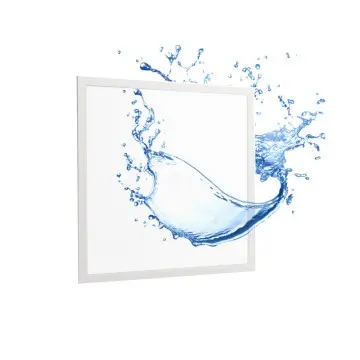
300/600/1200mm 18–60W LED Ceiling Panel Light
Ultra-slim edge-lit and backlit configuration engineered for Dutch pharmaceutical laboratories, micro-electronics manufacturing, and clean distribution offices.
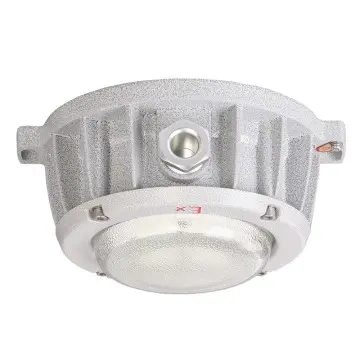
20–50W Round Mini Explosion Proof Ceiling Light
Compact architectural footprint for low-clearance oil pumping stations, gas metering skids, and solvent mixing booths throughout Dutch maritime docks.
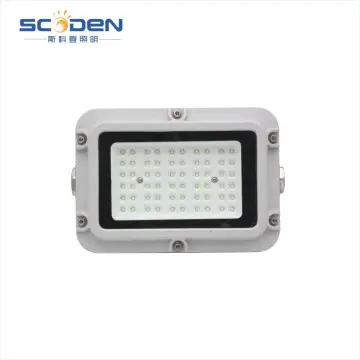
30–50W Rectangular Explosion Proof LED Flood Light
Equipped with thermal-shock resistant tempered glass and multi-angle mounting brackets for fuel depots, paint workshops, and chemical tank perimeters.
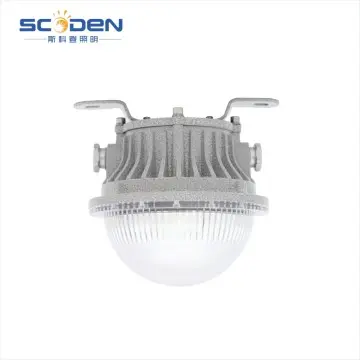
10–24W AC85–265V 120lm/W Explosion Light
Low-wattage, high-lumen density fixture engineered for continuous passageway lighting, offshore platforms, and shipboard utility compartments.
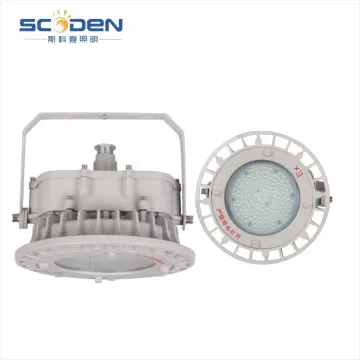
High Lumen 120lm/W Round Mining Explosion Ceiling Light
Reinforced mechanical frame built to resist mechanical shock, coal-handling dust, and continuous subterranean mining vibrations.
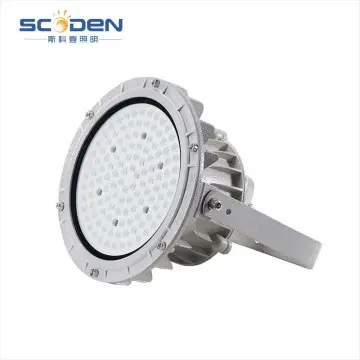
100W + 30W Emergency Backup Explosion Proof Lamp
Independent electrical chamber housing high-temperature LiFePO4 battery pack, ensuring seamless transition to emergency illumination during grid blackouts.
75–300W Compact Explosion Proof Floodlight
Precision optical TIR lenses engineered for high-mast yard lighting, chemical refinery cracking towers, and offshore drilling vessel illumination.
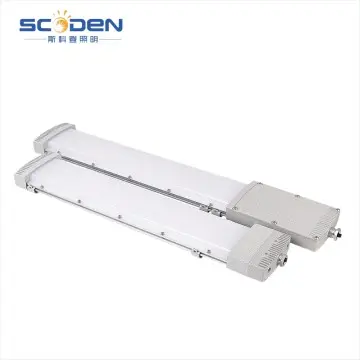
Long Strip LED Explosion Proof Fluorescent Light 20–60W
Direct structural replacement for legacy fluorescent explosion-proof tubes in chemical pump rooms, battery charging bays, and grain processing mills.
Frequently Asked Questions for Sourcing Directors & EPCs
Authoritative technical guidance compiled by Scoden senior application engineers regarding compliance, shipping logistics to Rotterdam/Amsterdam, and custom SKD programs.
What is the exact engineering difference between an LED tri-proof light and an LED explosion-proof light?
How do Scoden intelligent sensor lights support Dutch EIA (Energie-investeringsaftrek) tax deductions?
Can Scoden supply SKD (Semi-Knocked-Down) kits for localized assembly within the European Union?
What preventions are engineered into your radar sensors to eliminate false triggers from high-bay industrial fans or AGVs?
What documentation and photometric files do you provide for tender submissions and Dialux simulations?
What are your lead times and logistics capabilities for deliveries into Rotterdam Port or Schiphol Airport?
Secure Factory-Direct Project Quotations & IES Datasets
Connect directly with Scoden factory engineers in Yueqing. Review IES lighting simulations, explore private-label OEM terms, or request express samples for your upcoming Dutch or Western European lighting deployment.