
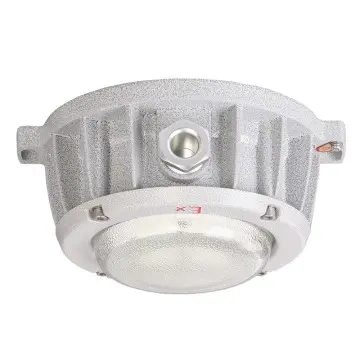
Heavy-Duty Lineup
Precision-Engineered Explosion High Bay & Hazardous Luminaires
Direct from our specialized Yueqing production facility. Each high bay luminaire undergoes aging stress screening, 100% withstand-voltage diagnostics, and complete goniophotometer profile verification.
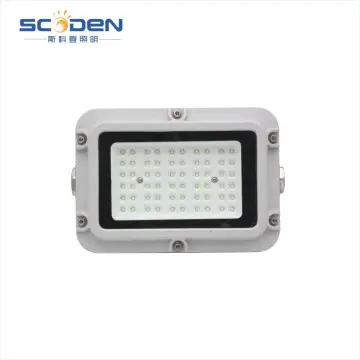
30–50W Rectangular Explosion Proof LED Flood Light
IP65 / IP66
Tempered Glass
Zone 1/2
Get Factory Quote
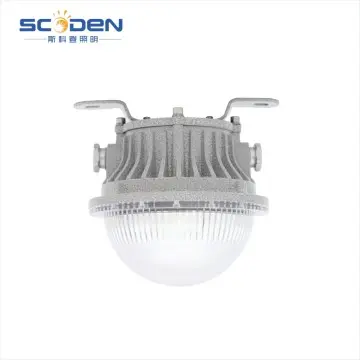
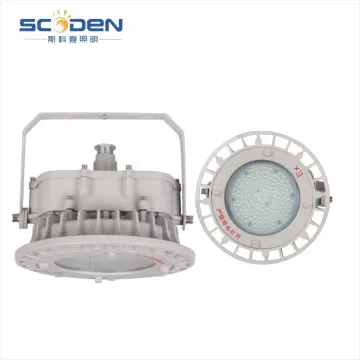
High Lumen 120 lm/W Round Mining Explosion Ceiling Light
Group I / II
High Bay
Heavy Duty
Get Factory Quote
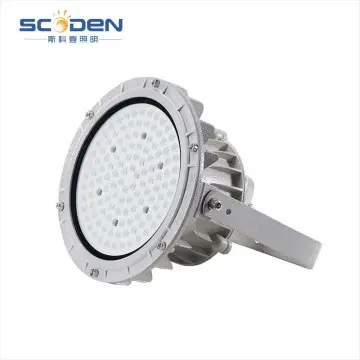
100W + 30W Emergency Backup Explosion Proof LED Lamp
Emergency 180min
IP66
Dual Driver
Get Factory Quote
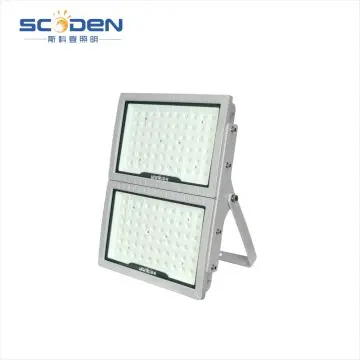
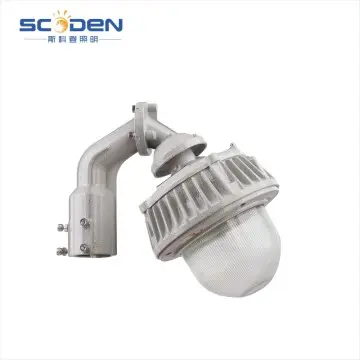
360° Anti-Glare Small Explosion Proof Industrial Light
360° Optical
Low Glare UGR<19
IP66
Get Factory Quote
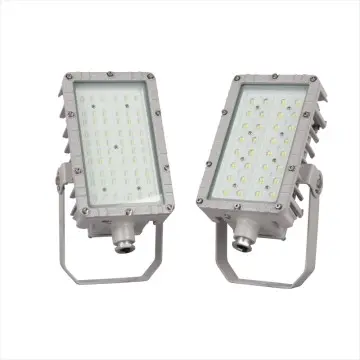
Multi-Module Explosion Resistant High Bay 300W / 400W
300W–400W
High Bay Master
Modular Heat Sink
Get Factory Quote
Supply Chain Hegemony
Strategic Sourcing Advantages from Yueqing: China’s Electrical Capital
Procuring ODM explosion-proof high bay luminaires from Zhejiang Skodan Lighting Co., Ltd. (Scoden Lighting) in Beibaixiang Town leverages the world's most dense cluster of electrical component suppliers, tooling specialists, and precision die-casting foundries.
Complete Vertical Supply Density
Located in Yueqing, our factory sources ADC12 die-cast aluminum enclosures, borosilicate explosion-proof tempered glass, flameproof cable glands, and copper-free alloy brackets within a 15 km radius. This compresses raw material delivery cycles by 60% compared to inland alternatives.
In-House IES Darkroom & Testing
We eliminate third-party testing delays. Our factory features proprietary integrating spheres, an in-house IES photometric darkroom, withstand-voltage testers, and automated continuous aging bays. Clients receive verifiable dialux-ready simulation files for every custom ODM configuration.
Optimized SKD / ODM Engineering
To minimize import tariffs and comply with local assembly directives in the Middle East, Southeast Asia, and South America, we engineer customized Semi-Knocked-Down (SKD) kits. Complete internal wiring harnesses, pre-sealed optical cavities, and mechanical hardware allow fast local finishing.
12+
Years LED Luminaire Engineering
2,000m²
Precision Production Area
100%
Hi-Pot & Aging Tested
ISO 9001
Certified Quality Management
Industry Evolution
Technological Trajectories in Hazardous Area High Bay Lighting
Hazardous location illumination is shifting from brute-force incandescent/HID retrofits toward integrated AI thermal dissipation, intelligent autonomous monitoring, and micro-cavity flamepath safety.
1. Computational Fluid Dynamics (CFD) Thermal Sinks
High bay luminaires running over 150W in enclosed hazardous areas generate high junction temperatures. Modern ODM engineering relies on aerodynamic chimney fins and phase-change thermal pathways, ensuring the exterior temperature complies strictly with T5/T6 surface ratings (≤100°C / ≤85°C) even in 55°C ambient plant conditions.
Prevents explosive dust auto-ignition2. IoT Microwave Sensing & Mesh Dimming
Standard explosion-proof fittings waste substantial power during low-occupancy shifts. Scoden integrates intrinsically isolated microwave sensors and multi-mode dimming logic inside flameproof enclosures, allowing plants to achieve 45–65% additional energy reduction without breaching safety integrity.
Occupancy-driven energy abatement3. Dual-Cavity Redundant Driver Topology
Driver failure remains the leading cause of industrial downtime. Next-generation high bay lights separate the optical chamber from the driver chamber (triple-cavity design). This physical thermal barrier protects high-spec electrolytic capacitors and allows field-swappable replacements without compromising the flame path seal.
MTBF > 50,000 Hours
Turnkey Implementations
Macro Industry Solutions & Localized Deployments
Different industrial verticals present radically diverse hazards. An explosive chemical vapor cloud requires a completely different mechanical containment philosophy than combustible grain or timber airborne dust.
Oil, Gas & Refining
Offshore rigs, oil depots, and distillation towers require IP66/IP67 ingress ratings paired with copper-free marine grade aluminum coatings to combat salt spray corrosion and volatile hydrocarbon vapors (Gas Group IIA/IIB).
Zone 1, Zone 2 Gas Rated
Chemical & Pharmaceutical
Solvent processing, reaction vessels, and distillation lines demand tight temperature class (T6) lights to ensure flammable vapors with low ignition temperatures like diethyl ether or carbon disulfide do not combust on fixture surfaces.
Acid-Resistant Polycarbonate
Grain, Flour & Agro Mills
Grain elevators and sugar silos carry immense dust-explosion risks (Zone 20, 21, 22). Smooth high bay contours prevent dust layering, eliminating thermal insulation effects that cause surface overheating and detonation.
Dust Ignition-Proof (Ex tb/tc)
Mining & Heavy Foundries
Subterranean coal mines require Group I methane compliance and IK10 impact-proof armored glass shields capable of resisting heavy blasting debris, intense equipment vibrations, and high humidity.
IK10 Mechanical Integrity
Technical Whitepaper
Engineering Specification Protocol: Zone, Gas Group & T-Class
Procurement errors in hazardous area illumination present life-safety hazards. Use this engineering checklist to structure your ODM explosion high bay RFQ according to IEC 60079 international standards.
01
Hazardous Zone Mapping
Identify operating conditions. Zone 0 (continuous presence) requires intrinsically safe systems. High bay lights are predominantly installed in Zone 1 (likely in normal operation) or Zone 2 (abnormal occurrence only).
02
Gas & Dust Group Ranking
Classify volatile compounds: Group IIA (Propane), IIB (Ethylene), or IIC (Hydrogen/Acetylene). Luminaires certified for Group IIC satisfy all sub-tier requirements (IIB and IIA) by definition.
03
Thermal Surface Restriction
Ensure the maximum external surface temperature of the luminaire is well below the auto-ignition temperature of any surrounding ambient gas or dust layers.
| Temperature Class (IEC/NEC) | T1 | T2 | T3 | T4 | T5 | T6 |
|---|---|---|---|---|---|---|
| Max Allowed Surface Temp (°C) | 450 °C | 300 °C | 200 °C | 135 °C | 100 °C | 85 °C |
| Typical Industrial Applications | Methane, Hydrogen plants | Butane, Ethyl alcohol | Gasoline, Jet fuels, Kerosene | Acetaldehyde, Diesel vapor | Special solvent handling | Nitrocellulose, Carbon disulfide |
International Procurement
What Global EPC Contractors & Distributors Demand from an ODM Partner
International tenders require uncompromising adherence to technical documentation, test verification, and supply chain scalability. We align our manufacturing operations with global procurement protocols.
Traceable Quality & Mill Certs
All structural casting batches are accompanied by raw material spectroscopy reports ensuring zero copper contamination (<0.1% Cu) to prevent galvanic corrosion in sulfurous and marine atmospheres.
DIALux Simulation Files (.IES)
Lighting designers require precise photometric measurements for lux-level compliance. Our in-house goniophotometer provides clean, bug-free IES and LDT files across multiple optical beam spreads (40°, 60°, 90°, 120°).
Private Labeling & Mold Tooling
From custom heat-sink logo casting and laser engraving to bespoke outer packaging and regional language compliance manuals, we protect our ODM clients' private equity and proprietary brand rights.
Frequently Asked Questions
Technical & Commercial Clarifications for Overseas Importers
Direct technical answers from our Yueqing engineering and quality verification team regarding specifications, customization limits, and compliance.
What is the fundamental engineering difference between a standard LED tri-proof light and an LED explosion-proof high bay? +
A standard LED tri-proof light utilizes sealed plastic or extruded aluminum housings to prevent water ingress, dust penetration, and surface corrosion (typically rated IP65/IP66 and IK08). They are intended for commercial parking structures, cold storage facilities, and standard industrial warehouses. In contrast, an LED explosion-proof high bay light is engineered to containment standards (such as Ex d flameproof or Ex e increased safety). The structural housing is heavy die-cast aluminum designed to withstand internal detonation without transmitting flames or hot sparks to the external flammable gas or dust atmosphere, while keeping exterior surface temperatures below auto-ignition limits (T-Class).
What parameters are needed to generate an exact ODM explosion high bay quotation? +
To provide an exact factory quotation, we require: (1) Target operating wattage or lumen package (e.g., 100W, 150W, 200W @ 130–150 lm/W); (2) Hazardous zoning requirement (Zone 1 or Zone 2, Gas Group IIA, IIB, or IIC); (3) Ambient temperature range (standard -30°C to +50°C, or extreme high-temp +65°C); (4) Desired optical beam spread (60°, 90°, or 120°); and (5) Functional options such as battery emergency backup runtime (60–180 minutes), intelligent microwave sensing, or specific input voltages (e.g., AC85-265V, AC/DC 24V-36V, or 347-480V).
Does Scoden support SKD (Semi-Knocked-Down) kits for local assembly plants? +
Yes. Many of our international partners assemble luminaires locally to reduce tariff burdens, satisfy government local-content regulations, or minimize freight costs. We supply precision-tested SKD packages including pre-machined and powder-coated die-cast bodies, tempered glass sub-assemblies, pre-wired LED engine arrays on high-conductivity MCPCBs, branded drivers (e.g., Meanwell, Inventronics, or custom OEM drivers), and complete sealing gasket kits.
How does your factory verify explosion-proof safety and optical compliance before dispatch? +
Every production batch undergoes strict multi-tier quality gates: (1) High-potential (Hi-Pot) withstand testing to ensure zero electrical insulation leakage under extreme voltages; (2) Automated 100% burn-in aging tests for 8 to 24 hours under fluctuating input cycles; (3) Air-tightness pressure decay diagnostics for IP66/IP67 mechanical integrity; and (4) Random lot verification inside our in-house photometric darkroom using an integrating sphere and goniophotometer to ensure strict lumen-per-watt and CCT consistency.
Can Scoden develop proprietary private molds for new ODM high bay projects? +
Yes. Our in-house engineering and R&D department collaborates directly with clients using 3D modeling (STEP, CAD), thermal simulation, and optical ray tracing. Once the thermal enclosure and optical paths are approved, we fabricate steel die-casting molds, produce rapid prototypes for safety lab certifications, and execute pilot production runs. Private tooling agreements can be signed to guarantee regional market exclusivity.
Complete Catalog Matrix
Industrial & Explosion-Proof Luminaires Available for Global ODM Sourcing
Explore our full spectrum of heavy-duty fixtures engineered for hazardous sites, harsh corrosive zones, food processing plants, and cleanrooms.
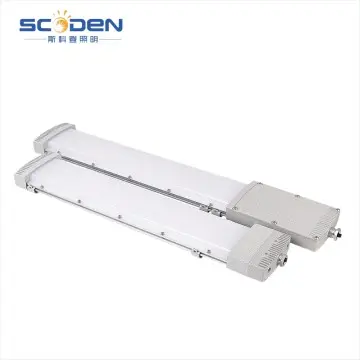
Long Strip LED Explosion Proof Fluorescent Light 20–60W
20–60W
Linear Fitting
Ex d e
View Specifications
High Lumen 120 lm/W Round Mining Explosion Ceiling Light
120 lm/W
Mining Rated
Heavy Impact
View Specifications
100W + 30W Emergency Backup Explosion Proof LED Lamp
Emergency Pack
IP66 High Bay
Ni-Cd / LiFePO4
View Specifications
75–300W Compact Explosion Proof Industrial Floodlight
75–300W
Compact Body
Zone 1/21
View Specifications
30–50W Rectangular Explosion Proof LED Flood Light
Oil Depot Duty
Tempered Glass
IP65
View Specifications
Multi-Module Explosion Resistant Flood Lamp 300W / 400W
300–400W
High Mast/Bay
Modular Optic
View Specifications
Accelerate Your Explosion High Bay ODM Program
Send your tender specifications, zoning classifications, and lumen targets directly to our engineering division in Yueqing. We provide prompt DFM feedback, DIALux simulations, and transparent ODM/SKD pricing structures.