
Featured Industrial & Explosion-Proof Bracket Luminaires
Precision-manufactured luminaire tubes and integrated battens engineered for extreme duty cycles, smart automation, and hazardous zone operations.


30-50W Rectangular Explosion Proof LED Flood Light


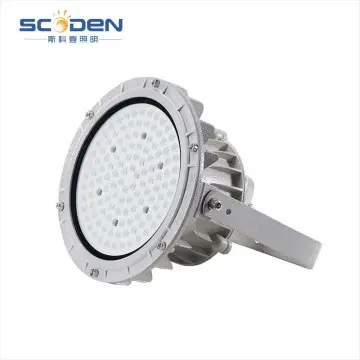
High Lumen 120lm/W Round Mining Ceiling Light

100W+30W Emergency Backup Explosion Proof Lamp

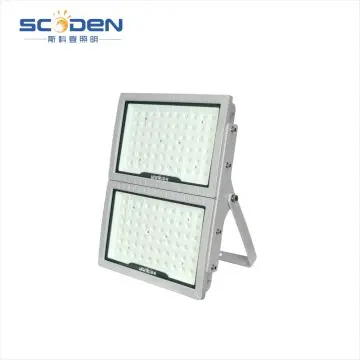
75-300W Compact Explosion Proof Industrial Floodlight

Long Strip LED Explosion Proof Tube Light 20W-60W
Industrial Architecture of Bracket Sensor Lamp Tubes
An authoritative whitepaper breakdown for global lighting procurement directors, electrical engineering contractors, and OEM brand partners.
5.8GHz Microwave Doppler Sensing vs. PIR
Unlike passive infrared (PIR) modules that rely on thermal differentials and are easily blinded by ambient factory heat, our ODM bracket sensor tubes utilize embedded 5.8GHz microwave Doppler radar. These transceivers penetrate polycarbonate diffusers flawlessly, allowing 360° motion detection up to a 12-meter radius with zero external sensor protrusions, sustaining reliable triggering in dirty, turbulent industrial airflows.
Integrated Stent Heat Sink Geometry
Thermal mitigation is key to luminaire longevity. Our integrated T5/T8 bracket stent profiles are extruded from high-purity 6063 aviation aluminum. Serving simultaneously as an architectural mounting track and a primary conductive heat sink, this structural union keeps junction temperatures (Tj) strictly below 65°C under continuous 24/7 duty cycles, preserving driver capacitors and LED phosphor integrity.
Multi-Step Dimming & Daylight Harvesting
Energy management architectures require automated step-down profiles. Scoden's smart sensor drivers incorporate dip-switch configurable hold times (30s to 10min), daylight harvest thresholds (5 to 50 Lux), and dual-level standby illumination levels (10% or 20% standby wattage), cutting continuous industrial electricity consumption by up to 78% in intermittent-occupancy zones.
China Factory Supply Chain Resilience & Yueqing Clustering Advantage
Operating from Beibaixiang Town, Yueqing—universally recognized as China’s premier Electrical Capital—Scoden Lighting capitalizes on an ultra-concentrated industrial cluster.
Rapid Component Sourcing Radius
Within a 15-kilometer operational perimeter, Scoden accesses ISO-certified aluminum die-casting foundries, specialized tooling workshops, PCB surface-mount (SMT) pick-and-place lines, and certified terminal block manufacturers. This localized ecosystem compresses initial prototype proofing down to 5 to 7 days, avoiding typical maritime supply chain friction.
Full In-House Verification Rigor
Product integrity is never outsourced. Our 2,000 m² Yueqing facility houses darkroom IES photometric distribution goniospectrometers, programmable aging test racks running 100% burn-in cycles at elevated temperatures, insulation withstand-voltage (Hi-Pot) testers, and automated high-pressure waterproof testing tanks, guaranteeing project deliverables match IEC specifications directly.
Flexible OEM / ODM / SKD Modularity
For multinational clients facing differential tariff regimes or domestic assembly mandates, Scoden provides Semi-Knock-Down (SKD) and Completely-Knock-Down (CKD) modular supply kits. From customized laser-etched brackets to tailored driver footprints and customized sensor sensitivities, our private mold tooling allows foreign brand houses rapid, defensible market entry.
Localized Industrial & Commercial Application Matrices
Optimizing bracket sensor lamp tubes across mission-critical, high-demand installations where safety, automation, and operational durability converge.
Underground Multi-Level Car Parks
Operating continuously at low background illumination (10-20% standby) until vehicle or pedestrian movement triggers full lux output, eliminating energy waste across sprawling subterranean facilities without introducing dark zones.
Logistics Warehousing & High-Racks
Mounted along high-density narrow aisles. Microwave corridor sensors read oncoming forklift velocity through shelving reflections, switching luminaires on proactively ahead of transit to maintain occupational safety.
Cold Storage & Food Processing Facilities
Conventional PIR switches fail when ambient temperatures drop to -25°C. Scoden’s radar modules perform flawlessly in freezing air, protected by IP65 hermetically sealed polycarbonate tubes that resist washdown sprays.
Chemical & Auxiliary Hazardous Utility Rooms
Zone 2 and Zone 22 utility corridors requiring non-sparking, robust bracket luminaires capable of resisting mild corrosive chemical vapors while delivering automatic, hands-free lighting via microwave automation.
Technical Roadmap & Next-Generation Industrial Lighting Outlook
As industrial automation expands, bracket sensor lamp tubes are evolving from standalone luminaires into intelligent, networked IoT edge nodes.
Phase 1: Wireless Mesh Connectivity & Group Synchronization (Current Implementation)
Eliminating point-to-point hardwiring through sub-1GHz RF or Bluetooth SIG Mesh modules. When one tube detects movement, it broadcasts an instantaneous signal to an entire linear array, achieving synchronized pathway illumination with zero latency.
Phase 2: 24GHz mmWave Micro-Presence Sensing (Deployment Window: 2025–2026)
Transitioning from traditional Doppler shift sensors to millimeter-wave 24GHz radar engines. These sensors can detect micro-movements such as human respiration, terminating premature cut-offs in precision assembly workstations and cleanroom environments.
Phase 3: DALI-2 & Building Management System (BMS) Cloud Integration (Future Horizon)
Embedding standardized digital bi-directional communication protocols into stent power supplies. This allows plant managers to monitor operating temperatures, burn-in hours, failure alerts, and localized space utilization analytics over MQTT/cloud dashboards.
Global Standards, Safety Directives & On-Site Support
Navigating cross-border compliance with exhaustive certification, verifiable IES darkroom testing, and robust legal quality guarantees.
IEC & CE Low Voltage / EMC Directives
Every batch of bracket sensor lamp tubes is evaluated to ensure compliance with EN 55015 electromagnetic interference and EN 61547 immunity standards, preventing microwave emissions from disrupting factory control PLCs or wireless telecommunications.
Certified In-House Photometric Files (IES/LDT)
We provide verified .IES and .LDT photometric files derived from our proprietary darkroom goniophotometer. Electrical engineers and lighting designers can import our files directly into DIALux and Relux software to validate uniform illuminance models prior to procurement.
Complete Export Documentation & Auditing
Backed by ISO 9001 quality system credentials, Scoden supports global EPC buyers with complete Certificates of Origin (CO), bill of lading customization, RoHS compliant material declarations, and live video factory audit verifications direct from the shop floor.
Hazardous Area, Stent & Floodlight Series
Explore our full line of industrial fixtures engineered for heavy industrial retrofits, marine ports, mining sites, and chemical plants.


Multi-Module Explosion Resistant Flood Lamp 300W/400W
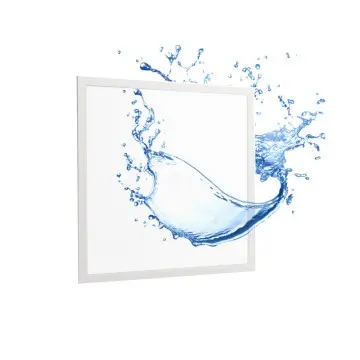
Precision Cleanroom Integrated Batten Light 60W
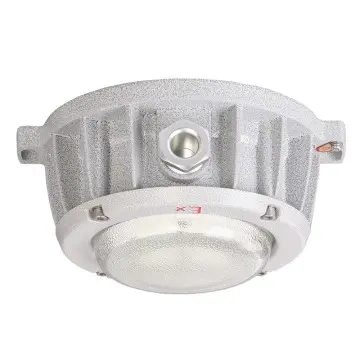
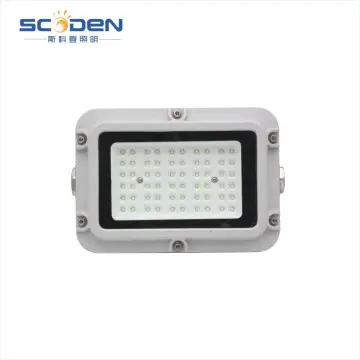
Petrochemical Explosion Proof Flood Light 50W
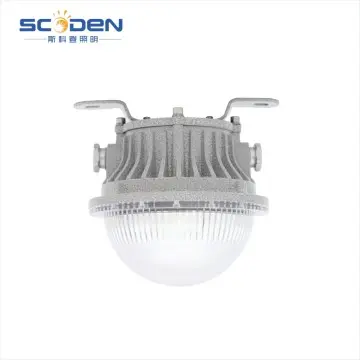
High-Efficiency Mining Corridor Stent Light
Emergency Battery Backup Linear Bracket Tube 60W
Full-Plastic IP65 IK08 Tri-Proof Stent Batten
Frequently Asked Engineering & Sourcing Questions
Direct technical clarifications addressing search intent regarding bracket sensor lamp tubes, ODM private tooling, and operational logistics.
What is the structural difference between an LED stent lamp tube and a standalone retrofit tube?
An LED stent (bracket) lamp integrates the LED driver, extruded aluminum spine, and optical diffuser into a single architectural fixture, eliminating the external tombstone pins and loose wiring of legacy troffers. This delivers superior thermal heat sinking, higher IP sealing, faster daisy-chained installation, and direct integration of microwave radar sensors behind the unified lens.
How does 5.8GHz microwave radar avoid false triggers in industrial environments?
Microwave sensors calculate frequency shifts from moving bodies via the Doppler effect. While sensitive, Scoden's smart driver circuitry employs digital filtering algorithms to ignore micro-vibrations from HVAC ducts and small pests. Dip-switch sensitivity can be configured to 100%, 75%, 50%, or 25% detection areas, tailoring detection boundaries to aisle dimensions.
Can Scoden customize emergency battery backups inside bracket sensor fixtures?
Yes. We engineer dual-driver bracket fixtures containing certified high-temperature LiFePO4 battery packs. Under normal conditions, the microwave sensor dims and turns the light on/off based on presence. During AC mains failure, an internal relay bypasses the sensor, driving the luminaire at 3W to 8W emergency output for 90 to 180 minutes to meet international fire egress standards.
What is Scoden’s OEM/ODM private molding process for bracket luminaires?
Our ODM protocol spans five milestones: 1) Thermal and optical CAD/BIM modeling; 2) 3D prototyping and CNC proofing (7 days); 3) Custom aluminum extrusion and injection mold fabrication (20-25 days); 4) In-house IES darkroom testing and EMC/Hi-pot pre-compliance verification; 5) Batch production under ISO 9001 quality controls with full private branding and packaging.
Where is your factory located and how can overseas clients verify production capacity?
Our physical manufacturing base is located on Baixiang Avenue, Beibaixiang Town, Yueqing City, Wenzhou, Zhejiang Province, China. Overseas procurement managers and independent engineering auditors are invited to schedule live high-definition video plant tours or coordinate third-party on-site audits (SGS, TÜV, Bureau Veritas) anytime during production runs.