
Precision Industrial Luminaires: Series Matrix 01
Factory-calibrated 2700K-6500K color tunable and harsh-duty tri-proof lights engineered for extreme chemical, thermal, and mechanical resistance.
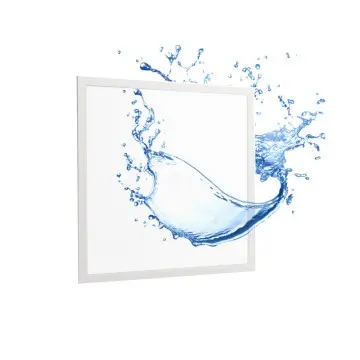
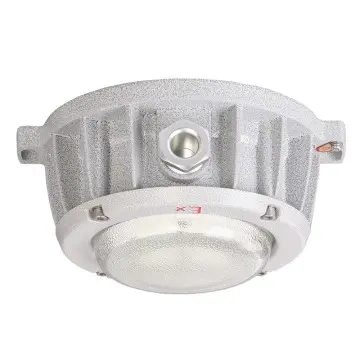
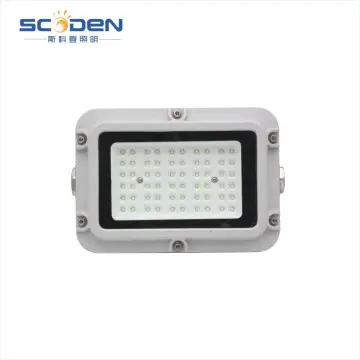
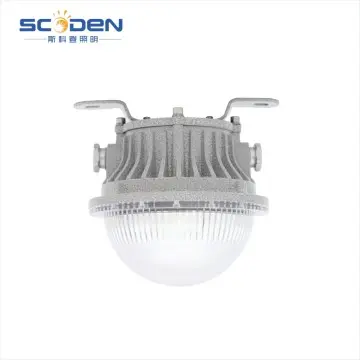
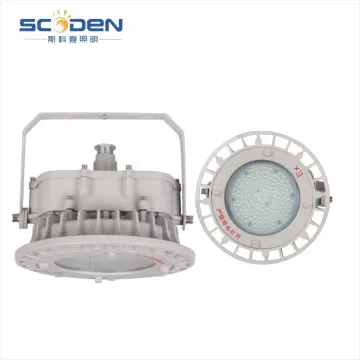
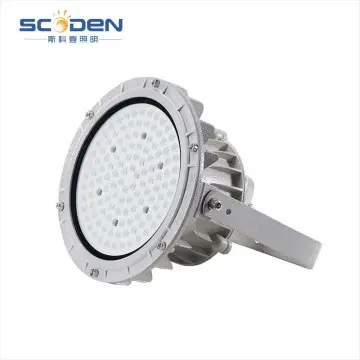
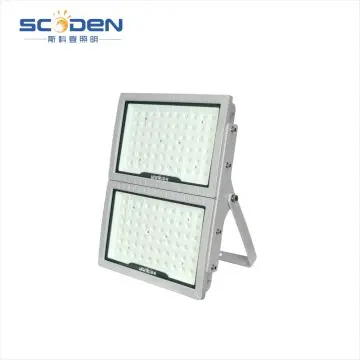
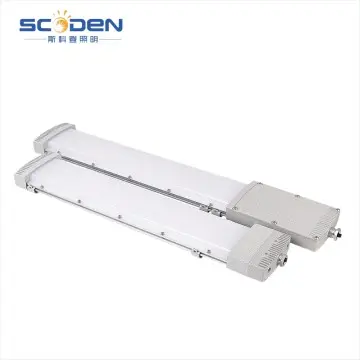
The Engineering Evolution: Tunable 2700K-6500K Tri-Proof Lighting
Bridging the gap between harsh environmental resilience (moisture, particulate, chemical vapor) and human-centric circadian optical efficiency.
Dynamic Spectral Tuning
Traditional industrial luminaires forced facility engineers into a rigid correlated color temperature (CCT)—typically 5000K or 6500K harsh cool white. While effective for contrast in mechanical sorting, cool white suppresses melatonin, inducing fatigue across shift transitions.
Our custom 2700K to 6500K tunable architecture integrates dual-channel constant-current LED drivers with matched-bin SMD2835/SMD3030 phosphor matrices. This allows real-time modulation from warm white (2700K–3000K) for low-stress night operations and livestock calming to pure neutral daylight (4000K–4500K) and crisp daylight (6500K) for precision optical inspection.
Tri-Proof Hermetic Shielding
The designation "Tri-Proof" represents triple defense: waterproof (IP65/IP66/IP69K), dustproof (hermetically isolated against fine particulates PM2.5/talcum), and corrosion-resistant.
Utilizing co-extruded UV-stabilized Polycarbonate (PC) or optical grade Polymethyl Methacrylate (PMMA) with seamless cellular polyurethane (PUR) or closed-cell silicone perimeter gaskets, Scoden fixtures prevent internal condensation and resist aggressive ammonia vapors, high-pressure CIP chemical washes, and coastal marine salinity.
Thermal Decoupling & L80 Lifespan
Thermal accumulation is the primary driver of premature LED lumen depreciation and color drift. Our engineering incorporates heavy 6063-T5 aviation aluminum core heat sinks mechanically bonded to MCPCBs using high-dielectric thermal conductive grease (>2.5 W/m·K).
By separating driver power compartments from the optical chamber, fixture junction temperatures ($T_j$) remain strictly below 65°C under continuous 45°C ambient loading, ensuring documented photometric stability exceeding 50,000 operating hours to L80/B10.
Localized Application Scenarios: Sector-by-Sector Engineering
Tailoring optical flux, housing chemistry, and color temperature profiles to specific regulatory and physiological operational environments.
Cold Chain Logistics & Sub-Zero Freezers
Operating temperatures between -25°C and -40°C compromise conventional rubber seals, causing rapid embrittlement and vacuum-induced moisture draw during thermal cycling.
Optimal CCT: 4000K to 5000K (CRI > 85). Scoden equips fixtures with low-temperature silicone gaskets rated down to -45°C, wide-range DC bus isolated drivers that ignite instantly with zero restrike delay, and anti-icing optical diffusers that mitigate frost accumulation and optimize vertical barcode reading readability across 12-meter pallet racks.
Agri-Livestock & Smart Poultry Brooding
Livestock and poultry possess acute spectral sensitivity; poultry retinae react intensely to flicker and blue-spectrum spikes, inducing aggression and physiological stress.
Optimal CCT: 2700K (Brooding/Resting) to 4000K (Laying/Activity). Our customized poultry-grade tri-proof solutions employ smooth 0.1% to 100% flicker-free amplitude dimming (PstLM < 0.2, SVM < 0.1). High-grade PMMA housings resist massive ambient ammonia ($NH_3$) concentrations that disintegrate standard PC covers, preventing micro-crazing and yellowing.
Pharmaceutical & ISO Cleanroom Facilities
Cleanroom environments enforce laminar airflow integrity, strict particle emission limits (ISO Class 4–7), and severe daily surface disinfection via hydrogen peroxide vapor (VHP) and sodium hypochlorite.
Optimal CCT: 5000K to 6500K (CRI > 90, R9 > 50). Scoden supplies seamless flush-mount or streamlined teardrop aerodynamic battens engineered without external exposed screws or crevices. Non-magnetic, non-outgassing silicone perimeter bonding ensures completely airtight seals that hold positive pressure room tests.
Multi-Tier Underground Car Parks & Depots
Underground transport corridors operate 24/7/365, suffering constant carbon exhaust particulates, brake dust adhesion, and high vibration from continuous vehicle throughput.
Optimal CCT: 3000K transition ramps to 5000K travel bays. Integrating intelligent microwave Doppler sensors (5.8GHz) embedded directly behind the sealed lens, Scoden fixtures switch from 10% standby baseline up to 100% illumination upon motion detection, delivering an immediate 78% energy load reduction while eliminating external sensor ingress points.
Heavy Chemical & Electroplating Workshops
Pickling, anodizing, and galvanizing lines liberate hydrochloric ($HCl$), sulfuric ($H_2SO_4$), and caustic soda aerosols that dissolve zinc-coated metal casings within months.
Optimal CCT: 6000K for color defect inspection. We utilize monolithic Polycarbonate-ABS blends or reinforced PMMA bodies with SUS316 marine-grade stainless steel clips and brackets. Internal conformal-coated PCBs shield solid-state electronics from galvanic failure and dielectric creepage.
Food Processing & Automated Bottling Lines
HACCP and FDA standards require that industrial luminaires present no risk of food contamination, strict glass-free construction, and ability to endure 100-bar water washdowns at 80°C.
Optimal CCT: 4000K–5000K Natural White. Scoden provides IP69K-certified cylindrical smooth-body fixtures designed with 0° water-retention angles. Water shedding ensures complete runoff, preventing bacterial biofilm build-up and particulate lodging.
R&D Architecture: 2025–2030 Solid-State Lighting Roadmap
Anticipating industrial automation, digital twin integration, and the transition toward modular, fully circular luminaire ecosystems.
| Architectural Pillar | Current Production Standard (2025) | Phase 2 Integration (2026–2027) | Future Target (2028–2030) |
|---|---|---|---|
| CCT Modulation Architecture | Dual-channel constant current dip-switch (3000K/4000K/6500K) + 0-10V analog tuning. | DALI-2 Type 8 (Dt8) digital multi-channel driver with microsecond color coordinate calibration ($xy$ tolerance < 0.003). | Autonomous closed-loop spectral tuning driven by onboard ambient daylight spectroscopy and circadian shift algorithms. |
| Photometric Efficacy & Optics | 120–140 lm/W with frosted UV-stabilized PC diffuser, 120° Lambertian distribution. | 160–175 lm/W with micro-prismatic glare-control optics (UGR < 19) and batwing asymmetric distributions for high racks. | 200+ lm/W monolithic chip-scale packaging (CSP) with embedded nanostructured anti-soiling hydrophobic coatings. |
| IoT & Industrial Connectivity | Isolated microwave radar presence sensors (5.8 GHz) with RF remote commissioning. | Bluetooth Mesh / Zigbee 3.0 / D4i certified sensor nodes enabling power consumption analytics and heat-mapping. | Ethernet-AP / Matter-over-Thread with integrated edge AI predictive luminaire failure and asset tracking telemetry. |
| Circular Economy & Housing | Single-piece extrusion with modular endcaps and mechanical quick-release clips. | Tool-free quick-swappable LED light engines and universal Zhaga Book 18 socketed sensor modularity. | 100% bio-based recyclable polycarbonate polymers with cradle-to-cradle zero carbon footprint certification. |
Milestone 1: Dynamic Driver Miniaturization
Transitioning to Gallium Nitride (GaN) high-frequency switching driver boards. This cuts power supply volumetric bulk by 42%, vastly expanding internal heat dissipation chamber volume while suppressing total harmonic distortion (THD) below 8% across full 100–277V ranges.
Milestone 2: Glare-Mitigated Micro-Optics
Eliminating operator eye fatigue in logistics sorting bays through multi-layered prism arrays that restrict high-angle luminance above 65° without lowering net fixture lumen output, sustaining compliance with EN 12464-1 workplace standards.
Milestone 3: Universal DC Microgrid Ready
Engineering direct-input DC bus compatibility (DC 190–360V) designed for native integration with industrial rooftop solar PV installations and battery energy storage systems (BESS), bypassing inefficient DC-AC-DC conversion losses.
The Yueqing Advantage: Industrial Density & Agility
Zhejiang Skodan Lighting Co., Ltd. (Scoden Lighting) is anchored in Beibaixiang Town, Yueqing, Wenzhou—internationally recognized as China's Electrical Capital. This unique geographical cluster houses over 10,000 electrical component and apparatus manufacturers within a 20-kilometer radius.
For global distributors, EPC contractors, and OEM brands, this cluster density delivers decisive supply chain resilience:
- Rapid Tooling & Mold Turnaround: Custom extrusion dies and injection molds completed in 15–20 working days versus 45–60 days in non-clustered zones.
- Direct Component Verticality: Instant tier-1 procurement for flame-retardant Bayer/Covestro polycarbonates, heavy-gauge copper wiring, silicone gasket extrusions, and certified surge suppressors (6kV/10kV).
- Optimized Cost Structure: Elimination of secondary inter-provincial shipping costs translates into a direct 12%–18% pricing advantage on landed quotes without compromising raw material specifications.
- SKD / Semi-Knocked-Down Modularity: Customized packaging protocols engineered to minimize ocean freight cubic meters and assist overseas importers in utilizing localized tariff exemptions.
Global Regulatory Harmonization & Hazardous Zoning Guide
Ensuring absolute compliance across international electrical grids, health and safety directives, and ATEX / IECEx hazardous zoning frameworks.
European Union (CE, ErP, RoHS)
Full compliance with Ecodesign Directive (EU) 2019/2020 (ErP), mandating energy efficiency index compliance, stroboscopic effect testing ($SVM \le 0.4$), and short-term flicker severity ($PstLM \le 1.0$).
End-of-life dismantleability protocols allow straightforward driver and LED board removal for circular recycling, maintaining compliance with CE-EMC, CE-LVD, and EN 60598-2-1.
North America (UL 1598, DLC 5.1)
Engineered for US/Canada standards with UL 1598 (Luminaires) and UL 8750 (LED Equipment) adherence. Fixtures feature isolated Class 2 low-voltage drivers, 0-10V dimming leads, and 120-277V / 347-480V wide industrial inputs.
Compliant with DesignLights Consortium (DLC 5.1 Premium) efficacy benchmarks (>130 lm/W) and integrated continuous dimming thresholds for utility rebate eligibility.
Middle East & High-Ambient Zones
Industrial sites across the GCC and tropical sectors experience ambient ceiling cavity temperatures exceeding +55°C combined with intense UV radiation and fine silica dust storms.
Our fixtures undergo extended thermal chamber endurance tests at +60°C, using premium Rubycon/Nichicon solid-state electrolytic capacitors and IK10 UV-stabilized polycarbonate that resists embrittlement.
| Hazardous Classification | Permissible Gas / Dust Groups | Temperature Class (T-Class Limit) | Recommended Fixture Architecture |
|---|---|---|---|
| Zone 1 / Zone 21 (High Probability Hazard) |
Gas: Group IIA, IIB, IIC Dust: Group IIIA, IIIB, IIIC |
T6 (≤ 85°C) or T5 (≤ 100°C) Auto-ignition safety barrier |
Flameproof die-cast ADC12 aluminum enclosure, tempered 4mm borosilicate glass, Ex d or Ex mb encapsulation, dual mechanical clamping. |
| Zone 2 / Zone 22 (Abnormal Hazard Presence) |
Gas: Group IIA, IIB Dust: Group IIIA, IIIB |
T4 (≤ 135°C) or T3 (≤ 200°C) | High-impact PC/PMMA housing, non-sparking Ex nA / Ex ec design, cellular silicone hermetic gasket, IP66 mechanical seal. |
| General Industrial / Non-Ex (Harsh Wet / Corrosive) |
Moisture, Ammonia ($NH_3$), Acid Vapors, Saline Mist | Standard industrial rating (-30°C to +50°C) | Full-plastic IP65/IP66/IP69K Tri-Proof Batten, 2700K-6500K dynamic tuning, tool-free stainless steel mounting clips. |
Industrial Lighting Procurement & Engineering FAQ
Clear, authoritative technical answers addressing CCT mechanics, chemical resistance, and project specification protocols.
Our fixtures utilize dual-circuit SMD LED arrays combining high-efficiency 2700K warm white and 6500K cool daylight chips placed in alternating interleaved pitches. Tuning is executed via an integrated multi-channel constant current LED driver. Depending on your system requirements, control is managed either through an onboard 3-way/4-way DIP switch (for fixed installation profiles), an analog 0-10V / 1-10V secondary control channel, or a digital DALI-2 (Device Type 8) bus that blends currents precisely without altering overall lumen output.
While Polycarbonate delivers superior impact resistance (IK08 to IK10, virtually unbreakable against physical collisions), it is prone to environmental stress cracking and severe yellowing when exposed to chemical solvents, cleaning agents, and high ammonia vapors. PMMA (Acrylic) must be specified in livestock/poultry farms (ammonia resistance), commercial car washes (detergent and wax mist), and food processing plants using caustic sanitizers. PC is preferred for logistics depots, car parks, and construction workshops where physical impact protection is paramount.
An LED tri-proof light is hermetically sealed against water jets, dust ingress, and surface corrosion (typically rated IP65/IP66 and IK08) for harsh commercial and industrial environments. An explosion-proof light is an engineered pressure-containment luminaire certified under ATEX, IECEx, or UL 844 to prevent internal electrical arcs, sparks, or excessive surface heat from igniting surrounding volatile gases (Zones 0, 1, 2) or combustible dusts (Zones 20, 21, 22). Explosion-proof units require heavy die-cast metal enclosures, flame path joints, and verified T-class thermal dissipation.
Yes. Scoden operates an in-house photometric test laboratory equipped with a high-precision goniophotometer darkroom. We generate verified .IES and .LDT files for all customized wattage, beam spread, and CCT configurations. These files enable electrical engineers and lighting designers to simulate exact lux levels, uniformity ratios, and UGR glare calculations in DIALux and Relux software prior to project commissioning.
Our emergency backup system employs an isolated, high-temperature LiFePO4 or Ni-MH battery pack managed by an automatic emergency inverter. When AC line voltage drops below 65% of nominal, the inverter automatically shifts the luminaire to emergency mode within 250 milliseconds, powering one channel (typically calibrated to 4000K or 5000K for optimum visual acuity) at 3W to 8W constant wattage for a certified duration of 90, 120, or 180 minutes. The emergency circuit includes an external self-test indicator LED and manual test switch.
We provide factory-installed internal through-wiring harnesses utilizing 3-core, 5-core, or 7-core high-temperature heat-resistant cables ($1.5\,\text{mm}^2$ or $2.5\,\text{mm}^2$). A 5-core through-wire system supports continuous AC power plus 0-10V dimming lines; a 7-core harness accommodates AC phase line, neutral, earth, dual DALI channels, and dedicated unswitched emergency charge wires. IP66 quick-disconnect push-in terminal blocks at both endcaps allow contractors to link up to 40 battens in a single continuous electrical run without opening the main optical chamber.
Every single manufactured unit is subjected to our 4-stage quality protocol under ISO 9001: (1) Dielectric withstand-voltage (Hi-Pot) test at 3750V AC between live conductors and external metal chassis to ensure insulation integrity; (2) Ground continuity resistance verification (<0.1 ohm); (3) Minimum 4-hour to 24-hour continuous burn-in aging under cycling electrical loads; and (4) Integrated sphere photometric and colorimetry check confirming lumen flux, CRI, and CCT tolerance within a 3-step MacAdam ellipse.
Yes. We actively collaborate with international lighting brands and assemblers in India, Southeast Asia, South America, and the Middle East by delivering complete SKD and CKD kits. We provide extruded housings pre-fitted with silicone gaskets, pre-drilled aluminum heat sink profiles, SMT-mounted LED boards, isolated drivers, certified stainless steel hardware, and comprehensive assembly SOP documentation. This allows clients to satisfy local manufacturing content requirements and significantly reduce customs import duties.
Unlike Passive Infrared (PIR) sensors that rely on direct line-of-sight thermal differentials and require a lens opening that risks water ingress, our 5.8 GHz high-frequency microwave Doppler sensors transmit radar waves directly through the solid polycarbonate/PMMA diffuser. This preserves 100% IP66/IP69K sealing integrity while providing 360° detection coverage across a 12-meter diameter at mounting heights up to 6 meters, unaffected by ambient operating temperature.
Standard OEM production runs (customized branding, laser marking, customized wattage/CCT profiles, and customized packaging) are dispatched in 15 to 25 business days. Rapid prototyping for custom extrusion designs or specialty mounting hardware requires 7 to 10 days for initial engineering drawings and functional samples. Bulk container consignments are loaded directly from our Yueqing factory with swift transit through Ningbo or Shanghai maritime ports.
Precision Industrial Luminaires: Series Matrix 02
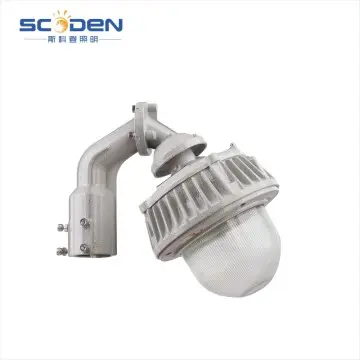
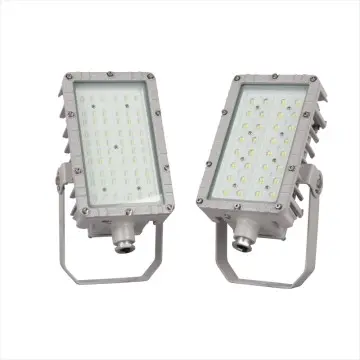
Explore high-bay, flood, and linear explosion-proof & tri-proof luminaires engineered for petrochemical, mining, marine, and continuous process plants.
Request Direct Engineering Quotes & IES Photometric Data
Engage directly with our factory engineering team in Yueqing. Whether you need custom 2700K-6500K CCT tuning boards, private extrusion tooling, DIALux project simulations, or SKD tariff optimization kits, we provide comprehensive quotes within 24 hours.
Technical Consultation Hotlines
- Direct Sales Mobile: +86 189 6886 9621
- Factory Switchboard: +86 577 2888 7800
- Export Desk WhatsApp 2: +86 139 6874 1169
- Export Desk WhatsApp 3: +86 195 5779 1693
- Download Catalog & Guides: Request 2025–2026 Lighting Catalog
- Explore All Product Lines: Explore Full Manufacturing Portfolio