
High-Efficiency Tunnel, Tri-Proof & Hazardous Area Luminaires
Engineered for high-vibration tunnel galleries, petrochemical arteries, and continuous underground duty. Fully aged, hi-pot certified, and photometrically mapped with in-house IES data.
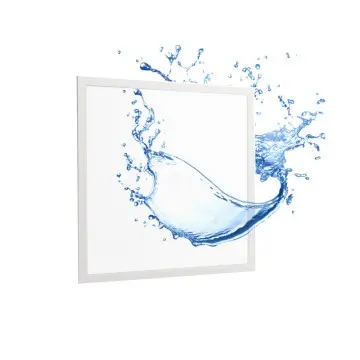
300/600/1200mm 18–60W LED Ceiling Panel Light
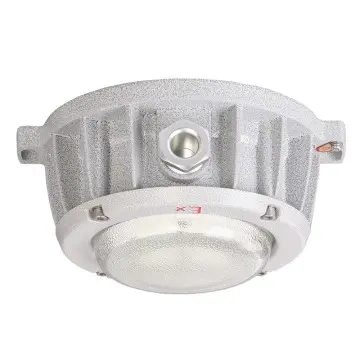
20–50W Round Mini Explosion-Proof Ceiling Light
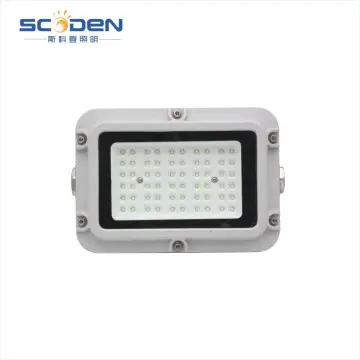
30–50W Rectangular Explosion-Proof LED Flood Light
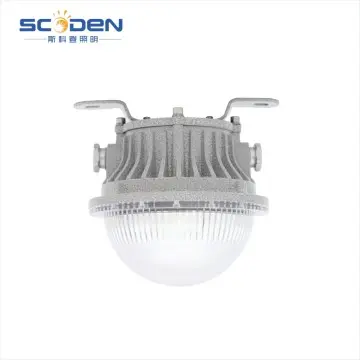
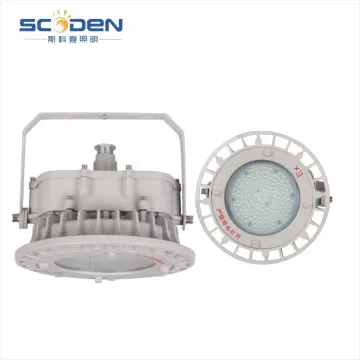
High Lumen 120 lm/W Round Mining Explosion Ceiling Light
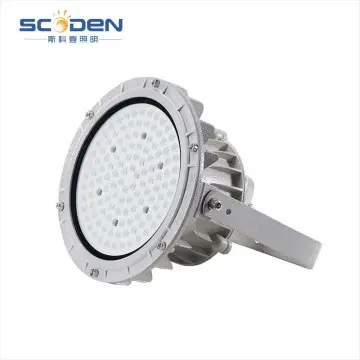
100W + 30W Emergency Backup Explosion-Proof LED Lamp
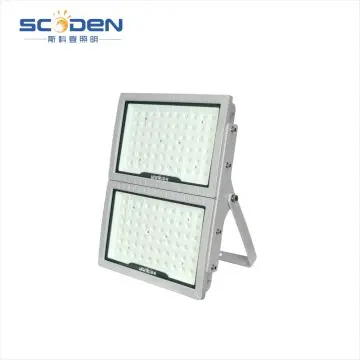
75–300W Compact Explosion-Proof Industrial Floodlight
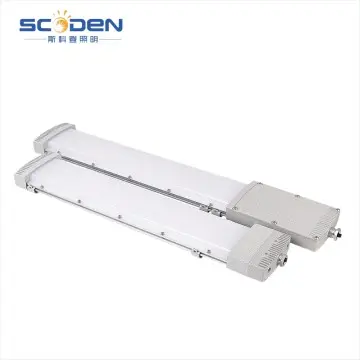
Long Strip LED Explosion-Proof Fluorescent Light 20–60W
Demystifying "Cheap" Tunnel Lights: The Total Cost of Ownership (TCO) Matrix
In heavy civil infrastructure, an initial discount of 15% on luminaire acquisition often triggers a 300% surge in cumulative lifecycle expenditures. True procurement intelligence shifts focus from Unit Purchase Price to LCC-optimized engineering.
The "Black Hole Effect" & CIE 88 Compliance
When drivers enter a vehicular tunnel at 100 km/h under ambient daylight exceeding 5,000 cd/m², poor optical control creates instantaneous blindness (the Black Hole Effect). Inferior "cheap" fixtures fail to deliver the high-density threshold luminance ($L_{th}$) and precise counter-beam optics required by CIE 88 / ANSI/IES RP-22-11, drastically multiplying catastrophic accident liabilities.
Lane Closure & Maintenance Multipliers
Closing a highway or urban tunnel lane for luminaire replacement costs municipal operators between $2,500 and $10,000 per night in traffic management, specialized boom trucks, and hazard insurance. A low-grade capacitor failure inside a cut-rate LED driver erases all initial fixture savings within a single maintenance intervention.
Vibration Resonances & Atmospheric Acidity
Tunnels are hostile micro-climates characterized by unrelenting piston shockwaves from heavy transport trucks, brake soot, diesel exhaust particulates, and wash-down chemicals. Budget luminaires using thin sheet metal or unpassivated aluminum undergo galvanic corrosion and optical degradation within 18 months.
The Yueqing Advantage: How Scoden Delivers True Cost-Efficiency Without Degradation
Why Yueqing, Zhejiang dominates high-spec industrial luminaire manufacturing: An uninterrupted 5-kilometer supply radius of high-pressure die-casting, precision tooling, and smart electrical component ecosystems.
Clustered Supply Chains: The True Source of "Low Unit Cost"
In international sourcing, the perception of "cheap" frequently connotes compromised bill-of-materials (BOM). At Scoden Lighting (Zhejiang Skodan Lighting Co., Ltd.), situated in Beibaixiang Town, Yueqing—universally recognized as China's "Electrical Capital"—cost advantages stem from dense spatial agglomeration rather than sub-par components. Within a 15-minute transport radius, our factory accesses pure ADC12 high-pressure aluminum die-casters, CNC precision machining centers, customized borosilicate glass molders, and automated surface anodizing facilities.
This geographic consolidation reduces internal logistics friction to near zero, eliminates multi-tier intermediate trading margins, and allows Scoden to integrate tier-one components (such as Lumileds/Bridgelux high-voltage emitter chips and Mean Well/Inventronics programmable drivers) at wholesale industrial rates inaccessible to standalone western assemblers.
Engineering Solutions Across Tunnel Lighting Zonal Topographies
A comprehensive architectural breakdown of luminance gradient management across the five discrete zones of civil engineering tunnels as mandated by CIE 88:2004 and EN 16276.
The 5 Structural Lighting Zones & Optical Deployment Strategy
Tunnel lighting is not general street lighting enclosed in concrete. It is an active optical compensation system designed to balance atmospheric ocular adaptation. High-speed vehicles transitioning from broad-spectrum sunlit exteriors (often exceeding 4,000 to 6,000 cd/m²) to enclosed spaces experience severe visual degradation without a structured luminance decay curve.
| Tunnel Zone | Distance Formula / Position | Optical Requirement | Target Luminance ($L$) & Technology |
|---|---|---|---|
| Access Zone ($L_{20}$) | Distance = Stopping Sight Distance (SSD) before portal | Ambient reference zone | $L_{20}$ luminance metering using outdoor luminance camera |
| Threshold Zone ($L_{th}$) | Start of portal to distance = $1.0 \times \text{SSD}$ | Steep asymmetric counter-beam optics | $L_{th} = k \times L_{20}$ (typically 40% to 100% of $L_{20}$); 100W–400W LED |
| Transition Zone ($L_{tr}$) | From end of threshold to interior zone | Progressive step-down dimming curve | Luminance gradually decreases down to $2\times$ Interior zone |
| Interior Zone ($L_{in}$) | End of transition to start of exit zone | Symmetric or wide bat-wing distribution | 1.5 to 10 cd/m² based on vehicle speed and traffic volume |
| Exit Zone ($L_{ex}$) | Last 50–100m before tunnel exit portal | Rear-view mirror adaptation optics | Elevated luminance to prevent flash blindness upon emerging |
To prevent the hazardous "strobe effect" caused by poorly spaced discrete luminaires, Scoden luminaires maintain strict longitudinal uniformity ($U_l \ge 0.7$) and overall uniformity ($U_o \ge 0.4$), with flicker frequency thresholds strictly engineered below 2.5 Hz or above 15 Hz in full compliance with CIE guidelines.
Specialized Operating Environments & Tailored Configurations
Tunnel luminaires must be tailored to their specific operational context. Scoden manufactures application-specific models engineered for distinct structural challenges.
High-Speed Mountain Highway Tunnels
Long-bore bi-directional mountain passages subject to heavy freeze-thaw cycles, high air pressure waves, and corrosive de-icing salts. Requires die-cast marine-grade ADC12 aluminum with C5-M anti-corrosion fluorocarbon powder coating and IK10 impact protection.
Underpasses & Urban Trench Arteries
High vehicular density, severe stop-and-go exhaust soot accumulation, and acoustic reverberation. Utilizes ultra-low-glare optical diffusers (UGR < 19, TI < 10%) combined with high-frequency microwave or loop detector auto-dimming for off-peak energy savings.
Metro Rail & Underground Transit Tunnels
Confined spaces governed by strict Low Smoke Zero Halogen (LSZH) fire protocols and NFPA 130 / EN 50121-4 EMC standards. Low DC voltage (DC 24V/48V/110V) centralized emergency busbar architecture with zero harmonic disruption to trackside signaling networks.
Mining Haulage Drifts & Petrochemical Trenches
Potentially explosive coal dust, methane, or volatile solvent vapors requiring certified explosion-proof containment (ATEX / IECEx Zone 1, Zone 2, Ex d / Ex mb IIC T6). Flame-proof cavities engineered to contain any internal explosion without external flash ignition.
Industry Trends: The Shift to AI-Powered, Adaptive Tunnel Lighting
Static on/off tunnel lighting is obsolete. Next-generation municipal deployments integrate dynamic sensors, predictive digital twins, and industrial IoT protocols to achieve up to 60% operational energy reduction.
DALI-2, D4i & PLC Mesh Automation
Modern EPC contracts now routinely specify bidirectional communication. Power Line Carrier (PLC) and DALI-2 protocols allow each individual luminaire to relay real-time power consumption, driver temperature, operating hours, and fault diagnostics directly to SCADA highway control systems without secondary control cabling.
AI Exterior Luminance Meter Coupling
By coupling exterior road luminance sensors ($L_{20}$) directly with an algorithmic AI controller, the threshold zone output dynamically mirrors real-time weather changes (cloud shadow passage, snow glare, torrential rain) in sub-second increments, preserving eye adaptation while slashing baseline daytime power draw.
Emergency Circuitry & NFPA 502 Fire Survival
Under tunnel disaster scenarios (such as vehicle fires reaching 1,000°C), tunnel lighting fixtures serve as life-safety beacons. Scoden offers triple-cavity fixtures with isolated lithium iron phosphate ($LiFePO_4$) emergency backups and fire-rated ceramic terminal blocks designed to maintain exit wayfinding illumination during critical evacuation windows.
Global Enterprise Sourcing Criteria: The Non-Negotiable Technical Specifications
Before issuing an RFQ or approving a production run from Chinese factories, multinational procurement managers and infrastructure EPCs must verify these 6 mission-critical technical thresholds.
1. Die-Cast Housing Integrity
Insist on certified ADC12 aluminum with copper content below 0.1% to prevent intergranular corrosion. Ensure a minimum powder coat thickness of 80–120 µm tested to ASTM B117 1,000-hour salt spray endurance.
2. Surge Protection Threshold
Tunnels suffer continuous inductive voltage surges from ventilation fans, pumps, and utility grid fluctuations. Fixtures must feature internal 6kV/10kV surge protection, supplemented by optional external 20kV SPD units.
3. LM-80 & TM-21 Projections
Verify that LED emitters possess independent LM-80 test reports demonstrating $L_{80}B_{10} > 100,000$ hours at $T_s = 85^\circ\text{C}$, preventing premature lumen depreciation and costly mid-life group relamping.
4. Ingress & Impact Certifications
Continuous tunnel washing vehicles deploy high-pressure water nozzles. Minimum sealing must reach true IP66 (IP69K preferred for jet washing), backed by certified IK09 or IK10 tempered glass shields.
5. SKD / CKD Assembly Options
To optimize tariff barriers and satisfy local content mandates (e.g., Buy America, Saudi SASO, or European domestic quotas), choose manufacturers capable of providing tested Semi-Knocked Down (SKD) sub-assemblies.
6. Complete Documentation Pack
Every delivery must be backed by batch-specific IES photometric raw files, ISO 9001 factory certificates, CE/RoHS compliance declarations, and ATEX/IECEx hazardous area documentation where applicable.
Factory Tour: Yueqing Skodan Lighting Production & Testing Facility
Take an inside look at our Yueqing factory floor: cutting machines, punch presses, automatic glue dispensing, laser engraving, high-voltage withstand chambers, and 100% burn-in aging racks.
Direct Communication with Qualified Lighting Engineers
We operate an open-door policy for all overseas municipal procurement buyers, electrical engineers, and private-label distributors. Video audits and on-site visits to our Yueqing facility are welcomed at all stages of project design and production.
Compliance Credentials & Global Supply Chain Partners
Rigorous third-party testing reports and long-term joint supply agreements provide international project stakeholders with full peace of mind.
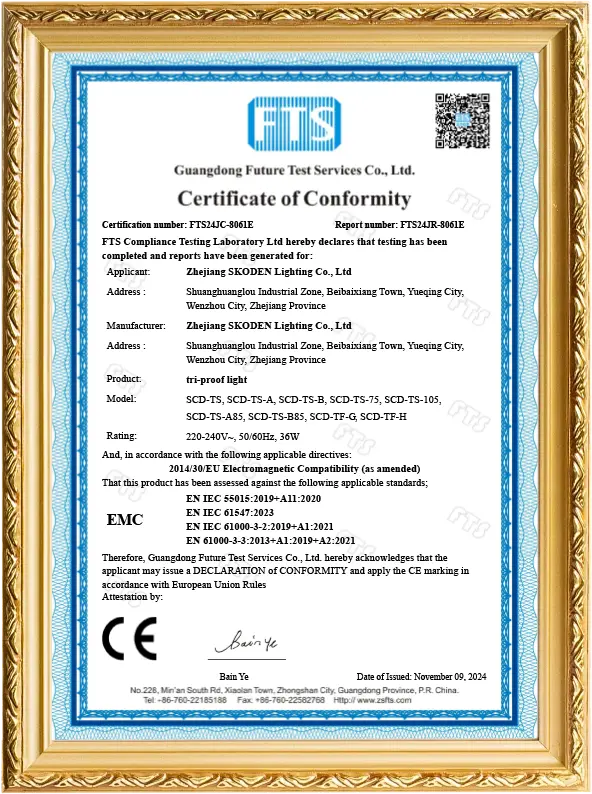
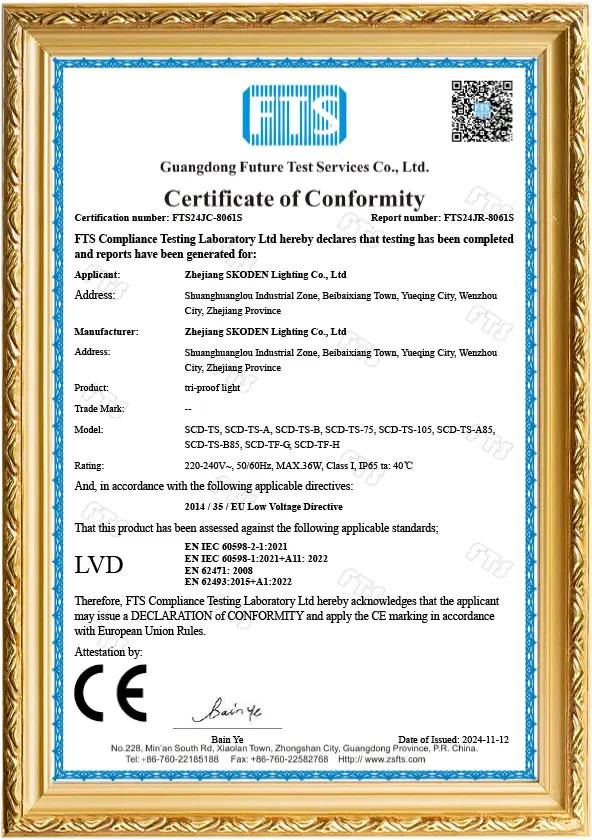
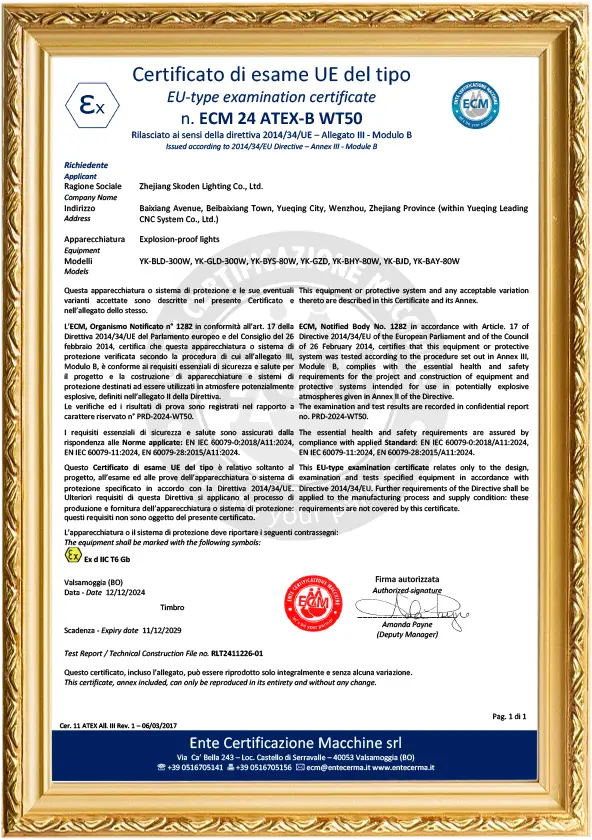
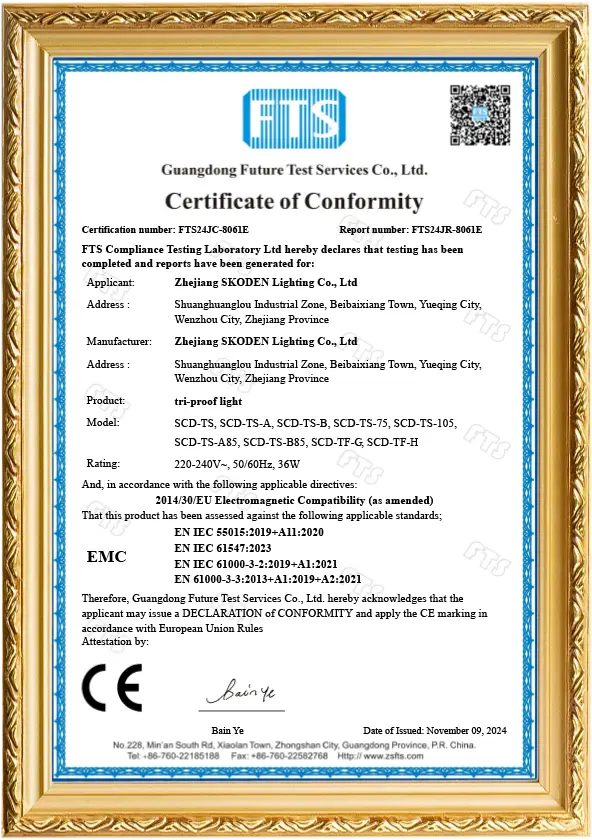
Supply Chain Integration Partners

Frequently Asked Questions by Global EPCs & Industrial Sourcing Teams
Direct answers from our engineering desk covering photometric simulation, driver reliability, surge endurance, and OEM/SKD execution.
What is the fundamental difference between an LED tri-proof light and a heavy tunnel or explosion-proof light?
How can a "cheap" factory-direct quote be evaluated without compromising road safety and certification compliance?
Does Scoden support OEM, ODM, and SKD (Semi-Knocked Down) programs for overseas manufacturing partners?
How do Scoden tunnel lights mitigate the dangerous "strobe flicker" effect inside underground corridors?
What documentation is supplied to international EPC contractors for technical submissions?
Can fixtures be configured with battery emergency backups and intelligent dimming sensors?
Industrial & Explosion-Proof Luminaire Portfolio
Explore our field-proven luminaires for highway tunnels, chemical corridors, offshore terminals, and underground mines. Request complete IES packages and factory-direct volume quotes.
30–50W Rectangular Explosion-Proof LED Flood Light
High Lumen 120 lm/W Round Mining Explosion Ceiling Light
100W + 30W Emergency Backup Explosion-Proof LED Lamp
75–300W Compact Explosion-Proof Industrial Floodlight
Long Strip LED Explosion-Proof Fluorescent Light 20–60W
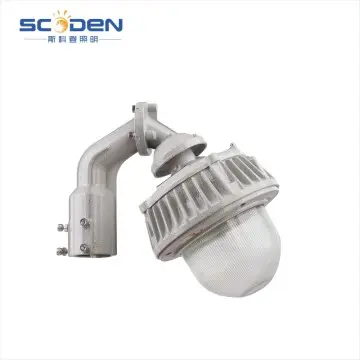
360° Anti-Glare Small Explosion-Proof Industrial Light
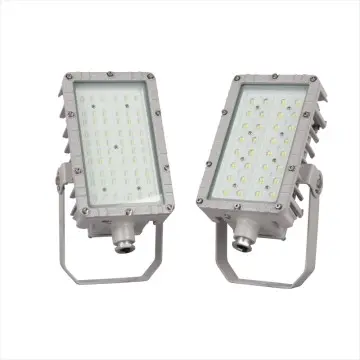
Multi-Module Explosion-Resistant Flood Lamp 300W / 400W
Initiate Your Infrastructure Lighting Project With Scoden
Submit your project cross-section drawings, target lux and luminance levels, mounting heights, and ambient operating criteria. Our in-house engineering darkroom will generate full DIALux simulations, batch IES files, and a factory-direct BOM within 48 hours.