Cleanroom / Seal

Discover high-efficiency, certified optical systems designed for oily smoke, aerosol contaminants, hazardous vapors, and extreme washdowns. Explore direct factory inventory with downloadable test profiles.


In high-throughput industrial and commercial environments, optical fixtures face subtle yet destructive degradation from airborne oil smoke, hydrocarbon aerosols, and vaporized cutting emulsions. Unlike ordinary atmospheric dust or intermittent water mist, airborne oil smoke consists of sub-micron droplet aerosols (typically 0.1 to 3.0 microns) mixed with volatile organic hydrocarbons, thermal decomposition particulates, and corrosive additives (such as chlorine, sulfur, and phosphoric anti-wear formulations).
When non-specialized commercial battens or standard IP65 lights are deployed in high-grease kitchen prep facilities, automotive stamping hubs, steel cold-rolling lines, or metal CNC processing centers, three distinct physical failure modes inevitably emerge:
Aerosolized lipids and mineral oils permeate the amorphous matrix of ordinary polycarbonates, triggering environmental stress cracking, micro-crazing, yellowing, and optical transmission losses exceeding 40% within 12 months.
Standard EPDM or Neoprene gaskets experience aggressive volumetric swell, softening, and plasticizer leaching when saturated with hot cooking grease and machine oils. This breaks hermetic compression and invites grease onto driver components.
As oily particulate films bake onto heat sinks and optical windows, thermal convective dissipation collapses. Junction temperatures (Tj) escalate above 85°C, catalyzing phosphor degradation, chromaticity shifting, and early driver cap dry-out.
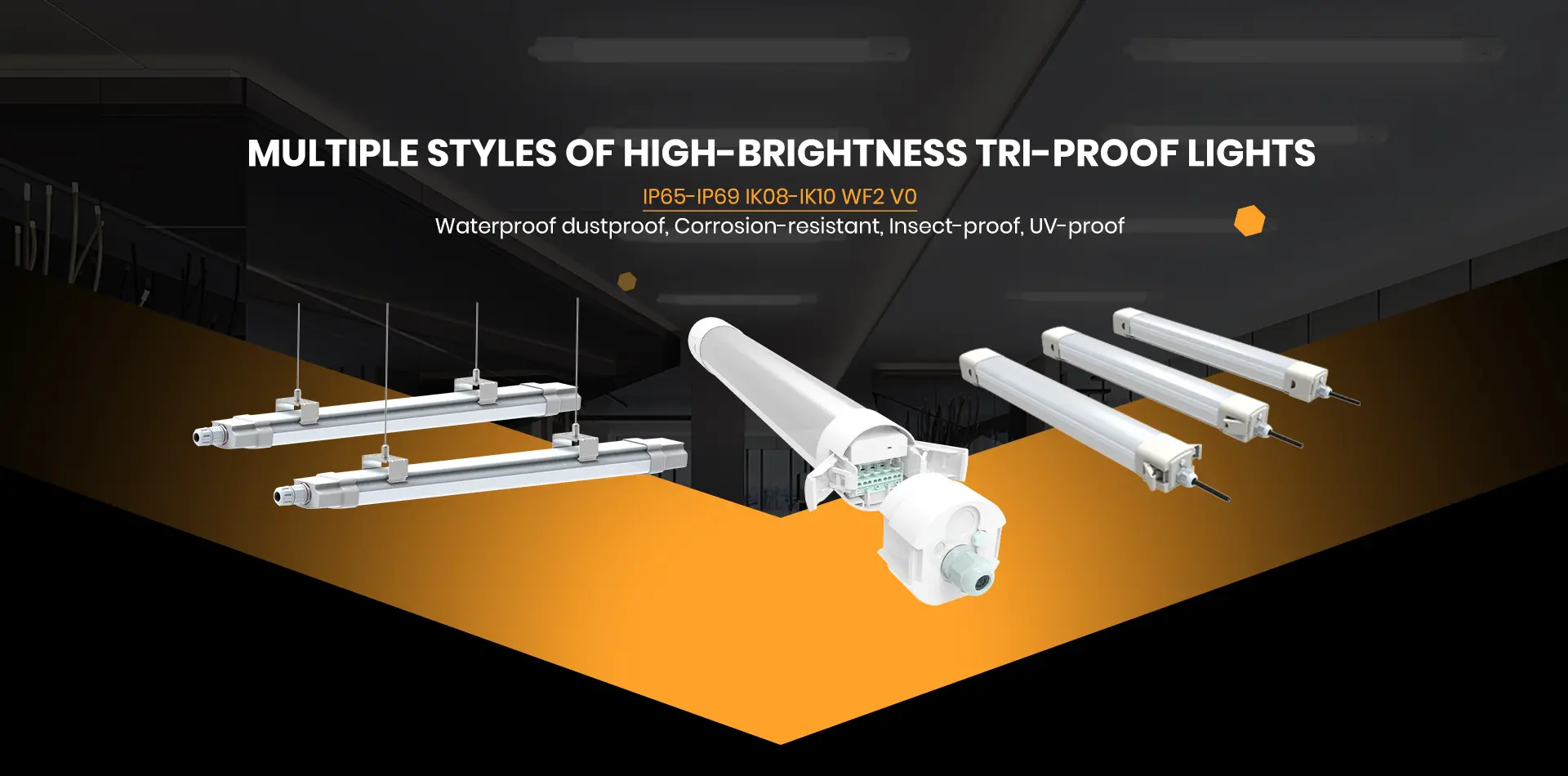
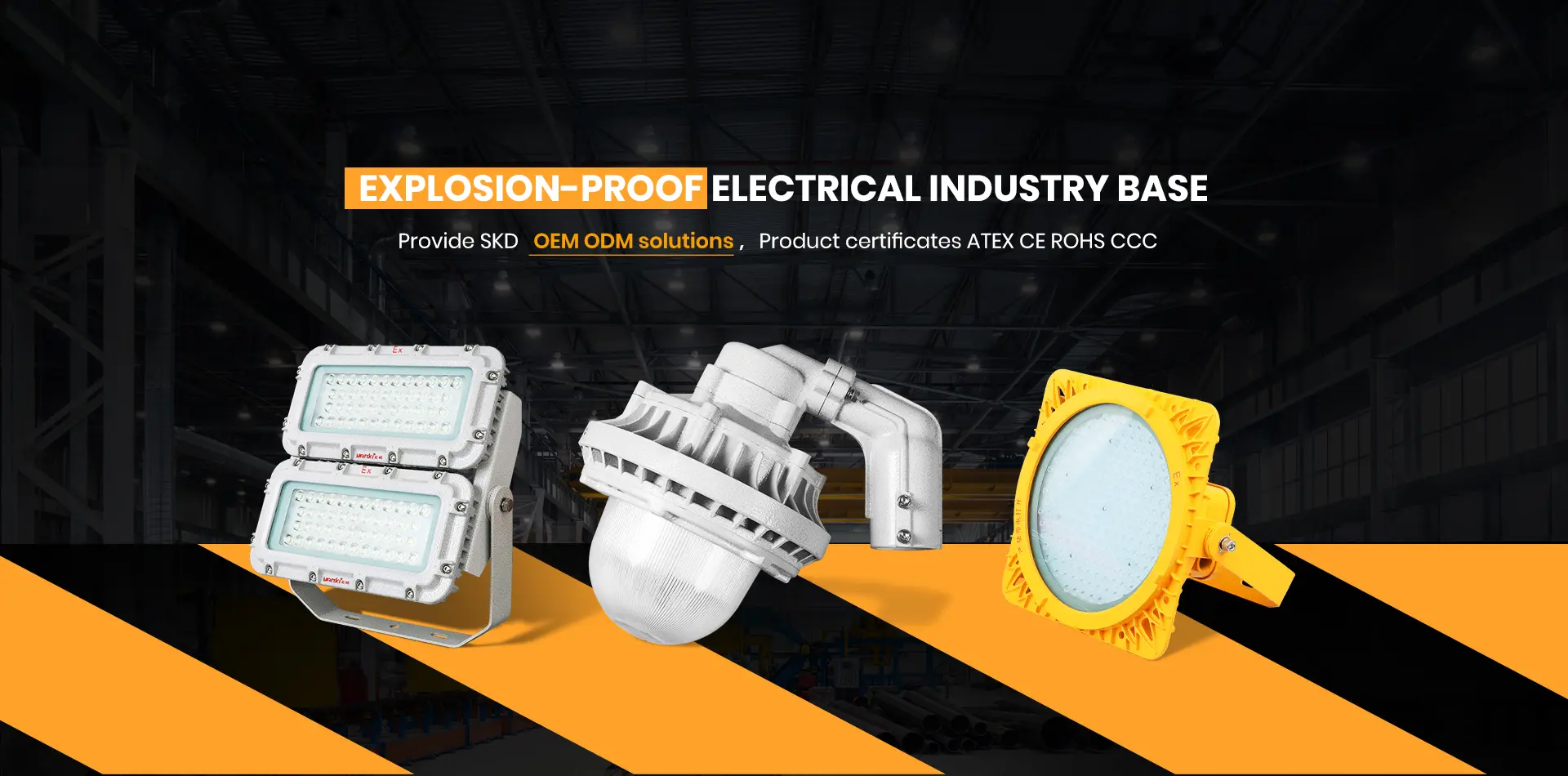
Zhejiang Skodan Lighting Co., Ltd. (Scoden Lighting) engineers purpose-built oil smoke-proof and hazardous-area luminaire architectures. By coupling high-integrity die-cast aluminum alloys (ADC12), nano-fluorocarbon oleophobic surface treatments, fluororubber (FKM) hermetic sealing systems, and thermal shock-resistant borosilicate glass lenses, Scoden fixtures maintain L80B10 operational lifetimes beyond 60,000 hours in saturated hydrocarbon atmospheres.
Situated in Beibaixiang Town, Yueqing—China's recognized electrical equipment manufacturing cluster—Scoden Lighting operates an ISO 9001 certified production matrix configured for global procurement.
Procuring low-cost industrial lighting often invites risks: inconsistent solder quality, counterfeit driver components, substandard silicone gaskets, and inflated photometric sheets. Scoden mitigates procurement vulnerability via integrated manufacturing control. Our facility hosts precision sheet cutting, mechanical punching presses, automated automated glue dispensing lines, laser serial marking, and continuous withstand-voltage dielectric testers.
Every batch destined for hazardous oil mist or vapor service undergoes 100% full-load thermal burn-in aging (minimum 4 to 12 hours) and rigorous hi-pot isolation qualification. Photometric performance is directly validated within our internal IES darkroom, providing authentic Dialux simulation files (.IES/.LDT) for EPC contractors and certified lighting planners worldwide.
Understanding macroeconomic shifts, environmental directives, and regulatory pressure across North American, European, and Asia-Pacific industrial sectors.
The global industrial lighting market is undergoing a rapid transition driven by mandatory decarbonization, strict occupational safety frameworks, and aggressive facility automation. Historically, maintenance engineers accepted periodic fixture replacements in greasy environments as an unavoidable operational expenditure. However, modern automated environments (such as continuous food fry-lines, automotive body shops, and enclosed CNC machining cells) run on strict downtime-reduction KPIs.
Across key industrial territories, regulatory bodies are actively tightening ingress and vapor-containment mandates:
OSHA 1910 standards and NSF/ANSI cleanability guidelines require non-absorbent, completely washable outer enclosures capable of withstanding steam and high-pressure chemical washdowns without chemical off-gassing.
Strict ATEX Directive 2014/34/EU and IFS Food standard version 8 mandates demand zero-shatter optical lenses (preventing glass contamination) alongside absolute chemical resistance to aggressive caustic cleaning detergents (pH 1-13).
Rapid expansion of precision electronics fabrication, lithium-ion battery drying, and automotive powertrain facilities across APAC necessitates cost-efficient, high-volume fixtures capable of enduring oily mist and solvent exhaust.
Real-world facilities present diverse operational stressors. Below is how our engineered fixtures solve localized illumination challenges.
Overhead fry lines, commercial baking centers, and rendering facilities generate dense animal grease plumes. Smooth, crevice-free PC/die-cast fixtures prevent fat accumulation and enable high-pressure CIP washdowns.
High-speed coolant atomization generates continuous synthetic oil mists. IP66/IK08 rated luminaires with fluoropolymer-treated surfaces prevent lens fogging and housing corrosion from cutting oil additives.
Heavy polycyclic aromatic hydrocarbon (PAH) vapors quickly coat conventional lighting surfaces. Scoden high-power floodlights utilize tempered safety glass that can be easily scrubbed with industrial solvents.
Solvent-laden overspray mist requires unified explosion prevention (Zone 1 / Zone 2) and anti-glare, high CRI (>85) color rendering to ensure accurate inspection of coating thickness and visual defects.
Systematic engineering comparison of luminaire body, lens, and gasket materials under sustained exposure to heated hydrocarbons and emulsified cutting oils.
| Performance Parameter | Standard Commercial Battens | Generic IP65 Tri-Proof | Scoden Oil Smoke-Proof Industrial Grade |
|---|---|---|---|
| Housing Construction | Sheet iron or thin PVC plastic | Unmodified Polycarbonate (PC) / ABS | Die-Cast ADC12 Alloy / Co-extruded Oleophobic PC |
| Optical Window / Lens | Standard Polystyrene (PS) | Injection Molded Standard PC | Toughened Borosilicate Glass / Chem-Coated PC |
| Primary Gasket Material | Open-cell sponge / Foam tape | EPDM / Standard Nitrile Rubber | Continuous-pour Fluororubber (FKM) / Solid Silicone |
| Hydrocarbon Oil Swell Resistance | Poor (Fails < 30 days) | Moderate (Hardening in 6-12 mos) | Immune to swell, embrittlement, & plasticizer wash |
| Operating Ingress Rating | IP20 – IP40 | IP65 (Degrades under oil) | Certified IP65 / IP66 Hermetic Sealing |
| Lumen Depreciation in Grease Fog | >50% in 6 months | >30% in 12 months | <8% over 30,000 hrs (Self-shedding surface) |
| Total Cost of Ownership (3 Years) | Very High (Frequent relamping) | High (Mid-term luminaire failure) | Lowest (Zero maintenance + Energy savings) |
How intelligent electronics, autonomous sensing, and advanced chemistry are transforming severe-environment lighting systems.
Integration of sol-gel derived fluoro-silica nanocoatings with contact angles exceeding 150° for water and 120° for mineral oils. Airborne grease droplets coalesce and run off passively during cleaning cycles, minimizing maintenance intervention.
Traditional PIR infrared sensors fail in greasy, thermally turbulent air. Scoden is integrating high-frequency radar sensors shielded behind hermetic PC housings, enabling dependable presence-sensing and bi-level dimming without sensor contamination.
Development of driver nodes equipped with continuous junction-temperature tracking, mains voltage surge logging, and DALI-2 / Zigbee mesh interfaces. Luminaires autonomously report thermal stress spikes caused by grease coating before failure occurs.
Direct, transparent guidance addressing quote structures, OEM customization, and harsh environment specifications.
Collaborating with tier-one global and regional component innovators to guarantee photometric reliability, driver resilience, and consistent batch manufacturing.









Direct-from-plant specifications for project procurement managers and global distributors. Select models to request batch discount structures.