
Top 10 LED Tri Proof Light Manufacturers for Global Buyers

Time:2026-10-24 Author:Aria
0%

Led Tri Proof Light has become a practical choice for demanding spaces, including warehouses, parking structures, food-processing areas, and coastal facilities. Its sealed housing protects LEDs from dust, moisture, vibration, and frequent cleaning. Buyers still need more than a bright product image. They need verified performance, stable supply, and evidence behind every technical claim.

The International Energy Agency reports that lighting represents about 15% of global electricity consumption. This makes efficient lighting a meaningful procurement decision, not merely a design preference. The U.S. Department of Energy also notes that LED products can deliver substantial energy savings and longer service life than conventional lamps. Meanwhile, Grand View Research and MarketsandMarkets continue to identify commercial and industrial LED lighting as major growth segments. Their findings support stronger demand for durable linear fixtures, although tri-proof-specific market figures remain less consistent.

This guide examines ten manufacturers serving global buyers. The comparison considers optical efficiency, IP and IK protection, thermal design, warranty terms, certifications, customization, and after-sales support. Real purchasing details matter: a 50-watt fixture may illuminate a 25-meter aisle, but only if its beam angle and mounting height are suitable. A factory’s sample may also differ from its mass production. That risk deserves attention. No ranking is perfect. Public data can be incomplete, and regional certification requirements vary. Buyers should confirm test reports, LM-80 or TM-21 evidence where relevant, emergency options, color temperature, operating temperature, and delivery capacity before signing contracts. These manufacturers offer useful starting points, not automatic purchasing decisions.
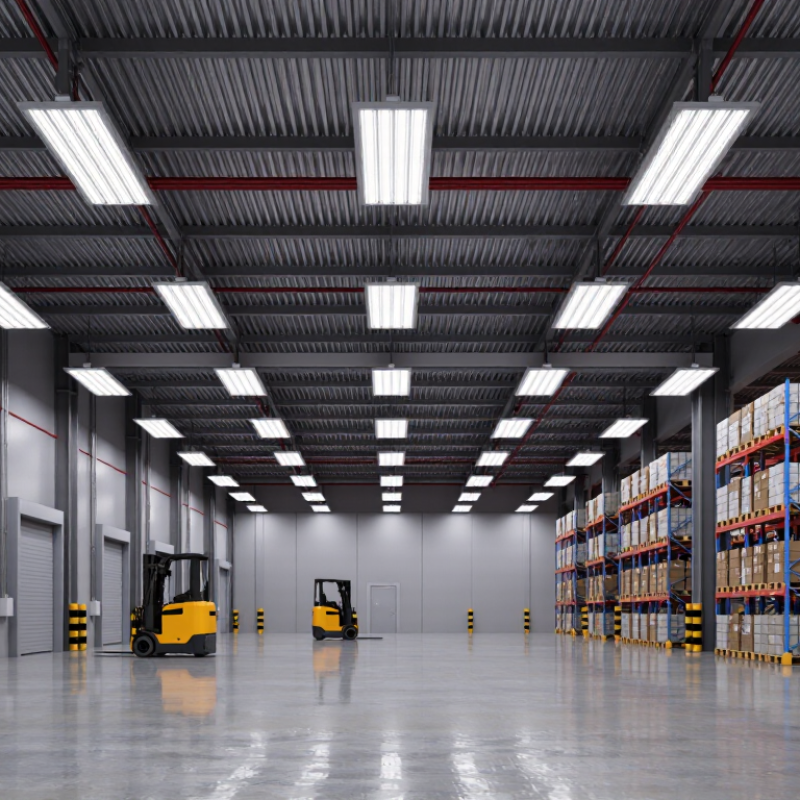
Top 10 LED Tri Proof Light Manufacturers for Global Buyers

What Defines an LED Tri-Proof Light Manufacturer

Top 10 LED Tri Proof Light Manufacturers for Global Buyers

What Defines an LED Tri-Proof Light Manufacturer

A credible LED tri-proof light manufacturer proves performance beyond a bright sample. Field experience matters: dust, condensation, vibration, and cold storage rooms expose weak designs quickly. The enclosure should match the application, commonly IP65 or IP66, with suitable impact resistance and sealed cable entries. However, an IP rating alone does not confirm long-term reliability.

Professional manufacturers publish photometric files, lumen-maintenance data, and thermal test results. The U.S. Department of Energy reports that advanced LED luminaires can exceed 150 lumens per watt, but efficiency figures require test conditions. Ask whether results follow LM-79 procedures and whether lifetime projections use TM-21 methods. A higher number is not automatically better. Sometimes, it hides reduced output or unrealistic temperatures.

Energy performance also deserves attention. The International Energy Agency estimates that lighting uses about 15% of global electricity consumption. Therefore, a dependable manufacturer should provide measured wattage, power factor, and operating-temperature limits. Look for traceable quality systems, sample consistency, and documented warranty conditions. Check them carefully.

A stronger supplier also explains installation details. This includes mounting clips, emergency options, cable glands, and cleaning requirements. In my experience, small hardware failures create more maintenance work than LED degradation. The uncomfortable part is simple: many buyers compare price before verifying test evidence. That habit needs reconsideration. A responsible manufacturer welcomes independent inspection, keeps production records, and admits where performance data remains limited. That honesty is useful.

Key Criteria for Evaluating Global Manufacturers

For global buyers comparing the Top 10 LED Tri Proof Light Manufacturers, technical evidence should outweigh polished brochures. A reliable supplier publishes LM-80 and TM-21 data for LED lifetime claims. The U.S. Department of Energy reports that advanced LED packages can exceed 200 lumens per watt in laboratory conditions. However, real fixtures perform differently. Ask for complete photometric files, thermal test results, and measured system efficacy.

Ingress protection is equally important in warehouses, tunnels, food-processing areas, and outdoor corridors. Check whether testing follows IEC 60598 and whether IP65 or IP66 results come from an accredited laboratory. IK impact ratings also deserve attention. Some suppliers mention “waterproof” without showing test conditions. That is a warning sign. Request samples and inspect gaskets, cable entries, clips, and lens joints under realistic installation pressure.

Manufacturing consistency often separates a dependable partner from a risky purchase. Review factory quality procedures, batch traceability, burn-in records, and corrective-action reports. The International Energy Agency’s Energy Efficiency 2024 analysis continues to identify efficient lighting as a practical electricity-saving measure, but savings depend on controls, maintenance, and actual operating hours. Warranty length matters less than warranty terms, spare-part access, and response time. I would also compare five-year energy and replacement costs, not only the initial quotation. My judgment can still be imperfect; independent verification remains necessary.

Top 10 LED Tri-Proof Light Manufacturers for Global Buyers

Top 10 LED Tri-Proof Light Manufacturers for Global Buyers

Choosing among the top 10 LED tri-proof light manufacturers requires more than comparing catalogue prices. Global buyers should examine housing quality, optical design, testing records, and after-sales support. A dependable manufacturer usually provides IP65 or IP66 protection, impact resistance around IK08, and stable performance in damp workshops, parking areas, warehouses, and food-processing spaces.

In practical project reviews, I check the aluminium or reinforced-polycarbonate body first. It should close evenly, without gaps around the gasket. A 4000K model with controlled glare can improve visibility without making a warehouse feel harsh. Buyers should also compare efficacy, driver quality, emergency options, sensor compatibility, and operating temperatures. Claims such as 120 lm/W or 50,000 hours need test reports, not attractive packaging. A high lumen figure can mislead.

The strongest manufacturers support international projects with clear datasheets, samples, batch traceability, and market-specific certifications. Buyers may look for documents aligned with IEC requirements and applicable regional approvals, such as CE, RoHS, or UL-related evidence. Warranty terms should explain driver failures, lumen maintenance, and replacement procedures. Factory audits can reveal details online brochures hide, including inconsistent assembly or weak cable glands. I would not rank suppliers by price alone. That approach is tempting, but it often creates maintenance costs later. Even experienced buyers sometimes overlook installation conditions, which can reduce real service life.

Product Range, Certifications, and Customization Options

Global buyers comparing the top 10 LED tri-proof light manufacturers should examine product depth, not only lumen claims. MarketsandMarkets estimates that the global LED lighting market will reach over USD 100 billion this decade. That growth increases the need for reliable technical screening. A practical range should include 600 mm, 1,200 mm, and 1,500 mm models. Look for 4,000K and 5,000K options, selectable wattage, wide beam optics, emergency versions, and sensor-ready designs. In cold storage, warehouses, and vehicle areas, sealed housings must resist dust, water jets, vibration, and chemical cleaning.

Certification details need closer checking. IEC 60598-1 supports general luminaire safety, while IEC 60598-2-1 applies to fixed general-purpose luminaires. IP65 or IP66 ratings indicate enclosure protection, but they do not prove impact resistance. IK08 or IK10 testing is useful in industrial spaces. Buyers in North America may require UL 1598 or equivalent listing, while European projects often request CE and RoHS documentation. DLC qualification can also support energy-rebate applications. Reports from the U.S. Department of Energy show LED products can deliver substantial energy savings, though real results depend on controls and operating hours.

Customization separates capable suppliers from catalog sellers. Ask for aluminum or polycarbonate housings, adjustable CCT, DALI or 0–10V dimming, microwave sensors, emergency batteries, and custom cable lengths. Request photometric files and test reports. A common weakness is vague testing language. “Waterproof” is not enough. Confirm the test method, sample date, factory location, and warranty conditions before approving the first shipment.

LED Tri-Proof Light Buyer Guide: Protection Levels and Compliance Scope

Comparison of internationally recognized protection ratings commonly specified for industrial LED tri-proof lighting. Higher values indicate stronger resistance within each protection category.

Product Range
Typical tri-proof options include linear fixtures for warehouses, parking areas, workshops, food-processing spaces, and damp industrial environments.
Certifications
Buyers commonly review IEC 60598-1, CE, RoHS, UL or ETL listing requirements, DLC eligibility, and the applicable IP and IK ratings.
Customization Options
Common specifications include wattage, color temperature, lumen output, emergency backup, occupancy sensors, dimming, cable entry, and mounting accessories.

Rating reference: IEC 60529 defines the IP code. The first digit represents protection against solid particles and the second digit represents protection against water ingress. IP69K is commonly associated with high-pressure, high-temperature washdown applications under ISO 20653.

How to Choose the Right Manufacturer for Your Project

Choosing the right LED tri-proof light manufacturer requires more than comparing unit prices. In project work, I check the factory’s production records, test equipment, and quality procedures. A reliable supplier should provide clear reports for ingress protection, impact resistance, electrical safety, and electromagnetic compatibility. Request documents suitable for your target market, such as CE, UKCA, UL, or other recognized certifications. Certificates alone are not enough.

Ask for a working sample before approving a large order. Inspect the diffuser, end caps, wiring, and mounting clips by hand. Check whether the housing remains stable after continuous operation. Thermal performance matters in warehouses, parking areas, and food-processing spaces. Request photometric files, color-temperature data, lumen-maintenance results, and a stated warranty. The manufacturer should also explain its testing method, not only show a polished brochure.

Communication can reveal more than marketing language. Does the technical team answer questions precisely? Can it control LED binning, driver changes, and batch traceability? Confirm the minimum order, lead time, spare-part policy, and packaging details in writing. An on-site audit or independent inspection adds useful evidence. I have learned that low prices often hide weaker connectors or inconsistent drivers. Still, no supplier is perfect. A rushed sample may pass basic checks and fail after months of heat and vibration. Build a small pilot installation, record operating conditions, and review the results with the manufacturer before scaling the project.

FAQS

What makes a reliable LED tri-proof light manufacturer?

A reliable manufacturer proves performance beyond a bright sample. It provides test reports, production records, and clear warranty terms. Field experience matters. Dust, moisture, vibration, and cold temperatures reveal weak designs.

What enclosure protection should I expect?

Many applications need IP65 or IP66 protection. The housing should include sealed cable entries and suitable impact resistance. However, an IP rating does not prove long-term reliability. Check sealing quality, end caps, and connector design too.

Which technical documents should a manufacturer provide?

Request photometric files, lumen-maintenance data, and thermal test results. Measured wattage and power factor are also important. Ask about testing conditions and calculation methods. A large efficiency number may hide unrealistic temperatures or reduced output.

How can I inspect a sample before placing a large order?

Examine the diffuser, end caps, wiring, and mounting clips by hand. Operate the sample continuously and check housing temperature. Look for loose connectors or unstable parts. A polished sample is not enough.

Why does thermal performance matter?

Heat can reduce light output and shorten component life. This matters in warehouses, parking areas, and food-processing spaces. Cold rooms create different stresses. Record operating temperatures during a pilot installation.

What installation details should the supplier explain?

The supplier should explain mounting clips, cable glands, emergency options, and cleaning requirements. It should also confirm spare parts and packaging details. Small hardware failures can create repeated maintenance work. They are easy to overlook.

How can I judge a supplier’s quality control?

Ask whether the supplier controls LED binning and driver changes. Request batch traceability and production inspection records. Independent inspection can add useful evidence. Certificates alone are not enough.

Should I choose the lowest unit price?

Not automatically. Lower prices may hide weaker connectors or inconsistent drivers. Compare test evidence, warranty conditions, lead time, and maintenance risks. A cheaper light can become expensive after repeated failures.

Is a pilot installation necessary?

A small pilot is strongly recommended before full deployment. Install several units under real heat, vibration, or moisture conditions. Record operating hours and visible changes. I have learned that basic checks can miss later failures.

Conclusion

This guide explains what defines a reliable LED Tri Proof Light manufacturer and why manufacturing capability, quality control, technical expertise, and supply consistency matter to global buyers. It outlines key evaluation criteria, including product performance, durability, energy efficiency, factory experience, certifications, testing procedures, production capacity, communication, and after-sales support. The article also presents a practical overview of the top manufacturer types suitable for international projects, without focusing on individual brand names.

Readers will learn how to compare product ranges, certification options, installation designs, color temperatures, wattages, housing materials, and customization services. It also highlights the importance of confirming compliance with destination-market requirements, warranty terms, delivery schedules, packaging standards, and technical documentation. By matching these factors with project conditions such as installation environment, budget, lighting performance, and order volume, buyers can select an LED Tri Proof Light manufacturer that offers dependable quality, flexible solutions, and long-term cooperation potential.

Aria

Aria

Aria is a dedicated marketing professional with a deep passion for innovative strategies and a keen understanding of our company's product offerings. With a wealth of experience in the industry, Aria excels at crafting engaging content that highlights the unique features and benefits of our......