
Global sourcing of a Led Waterproof Light requires more than comparing wattage and prices. A product may look reliable online, yet fail after weeks of rain, dust, vibration, and temperature changes. Buyers must examine protection ratings, housing materials, certifications, warranty terms, and supplier consistency. Small details matter. Think of cable glands, gasket compression, drainage paths, and connector corrosion.
Lighting engineer James Benya offers a useful principle: “Good lighting begins with understanding the application, not the fixture.” This idea applies directly to waterproof lighting procurement. A coastal warehouse needs different protection from an indoor food-processing area. Salt mist, cleaning chemicals, ceiling height, operating hours, and maintenance access should shape the specification. IP65 may suit sheltered conditions, while exposed installations may require stronger protection. However, an IP rating alone cannot prove long-term performance.
Real sourcing experience also reveals uncomfortable gaps. A factory may provide attractive samples but deliver inconsistent batches. A certificate may cover one model, not every variation. Even a perfect checklist cannot guarantee a perfect shipment. That is why responsible buyers should request test reports, production photos, sample inspections, and clear replacement procedures. Ask how the Led Waterproof Light performs after repeated thermal cycling, not only how bright it appears on day one. Compare lumen maintenance, driver quality, beam distribution, and energy use over time. The cheapest quotation can become expensive through early failures, labor costs, and emergency replacements. Careful verification creates a more dependable supply chain, though no sourcing decision is completely risk-free.
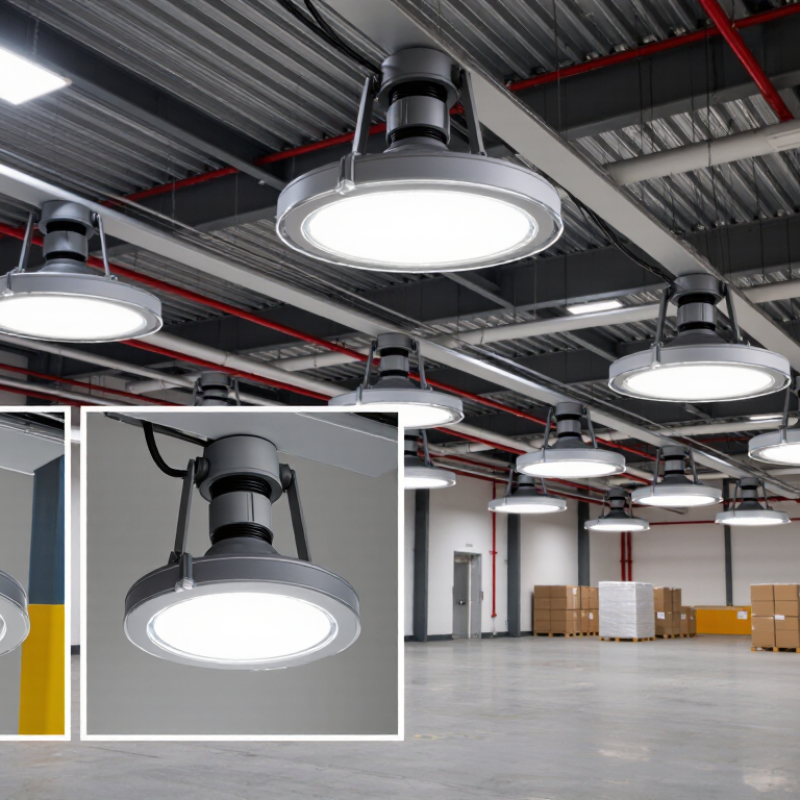
Choosing LED waterproof lights begins with identifying the light type and its working environment. LED strips suit cabinets, signage, and narrow channels. Linear fixtures cover warehouses, workshops, and covered walkways. Floodlights serve yards, loading areas, and building exteriors. Underwater fixtures require stricter sealing and specialized installation. The shape affects heat control, cable entry, maintenance, and replacement costs.
Protection ratings should be read carefully.
IP65 means dust-tight protection and resistance to water jets. IP66 handles stronger water jets. IP67 allows temporary immersion, usually up to one meter under defined conditions. IP68 supports longer or deeper immersion, but the manufacturer must state the test conditions. IP ratings do not confirm resistance to impact, salt, chemicals, ultraviolet exposure, or high temperatures.
Request test reports referencing IEC 60529, wiring diagrams, operating temperature data, and sample inspection records. Check whether the rating applies to the complete fixture or only its housing. That detail matters. A sealed lamp can still fail through a weak connector or damaged cable gland. I have seen buyers select IP68 products for open coastal sites, then overlook corrosion protection. That choice looked safe, but it was incomplete. Ask for evidence. Also verify lumen output after thermal testing, not only the initial laboratory reading.
Choosing LED waterproof lights for global sourcing starts with the installation environment, not the product catalog. A coastal walkway faces salt spray, wind-driven rain, and repeated temperature changes. A warehouse ceiling may only need protection from dust and occasional dripping water. Match the enclosure’s IP rating to these real conditions.
IP65 can resist water jets, while IP67 handles temporary immersion under specified conditions. These ratings are useful, but they do not describe impact strength, corrosion resistance, or installation quality. This distinction matters.
From site inspections, I have seen failures caused by open cable glands, trapped moisture, and poorly sealed junctions. A well-rated light can still fail when water travels along a cable into the housing. Check gasket materials, connector design, mounting angles, and drain paths. Ask suppliers for test reports, temperature ranges, and batch inspection records. Confirm whether testing covers the complete fixture, including the cable entry. Do not rely on a rating printed on a carton. Documentation should match the exact model and configuration. It sounds basic. It is often missed.
Tips: Map rain, spray, dust, immersion, and cleaning methods before requesting quotations. For outdoor projects, consider UV exposure and salt corrosion separately. Request samples and inspect seals after installation trials. Test switching at low temperatures if winter conditions are expected. Leave room for uncertainty; local weather may be harsher than the project brief suggests. A slightly higher protection level may reduce risk, but unnecessary specifications can increase cost and complicate maintenance.
Choosing LED waterproof lights for global sourcing requires more than checking the advertised lumen number. Brightness should be measured in lumens, not watts. The U.S. Department of Energy’s Solid-State Lighting reports show that efficient LED products can exceed 100 lumens per watt, although real performance varies with optics, temperature, and drivers. Ask suppliers for test reports using recognized photometric methods. A 2,000-lumen fixture may appear bright, yet poor beam control can leave dark areas under a canopy.
Color also affects practical performance. For retail, residential, and hospitality projects, 2,700–4,000K usually creates a comfortable appearance. Industrial areas may require 4,000–5,000K for sharper visual contrast. Verify color rendering through CRI data, not marketing language alone. A CRI above 80 is common for general applications, while critical inspection spaces may need higher performance. I would also request chromaticity data; color can shift after prolonged heat exposure.
Power use should include the driver, not only the LED chips. The International Energy Agency reports that lighting remains a significant share of global electricity demand, making efficiency important at scale. Review watts, power factor, and standby consumption. For lifespan, avoid accepting “50,000 hours” without conditions. LED life is commonly expressed as L70, meaning output falls to 70% of its initial level. LM-80 and TM-21 evidence is more useful than a bold carton claim. Waterproof ratings such as IP65 do not guarantee thermal durability. Salt, humidity, and poor sealing still matter. Small oversights become expensive.
Evaluate brightness, color temperature, power use, and LED lifespan across common waterproof lighting applications.
The figures are representative technical values commonly found in waterproof LED product specifications. Higher lumens provide more light, while lower watts indicate better energy efficiency. Warm white around 3000K is suitable for decorative areas, whereas 4000–5000K is generally preferred for workspaces, security, and underwater visibility. Actual performance depends on optics, operating temperature, driver quality, installation, and certification requirements.
When evaluating LED waterproof lights for global sourcing, inspect the materials before comparing prices. A durable housing often uses powder-coated aluminum, tempered glass, and UV-resistant cable jackets. Silicone gaskets should sit evenly, without gaps or flattened corners. Check the IP rating, but do not treat it as permanent protection. Water pressure, sunlight, salt, and poor installation can reduce performance.
In practical sourcing, request independent test reports and a clear declaration of conformity. CE requirements may apply in Europe, while UKCA, FCC, or other national rules may apply elsewhere. RoHS and REACH documentation can support restricted-substance compliance. Requirements vary by destination. Confirm the exact model, voltage range, plug type, and test standard on every document. A report for one housing size may not cover another.
Safety deserves direct verification. Ask about grounding, surge protection, operating temperature, cable glands, and thermal management. A light that feels cool during a short test may still overheat after eight hours on a warehouse roof. Request samples, installation instructions, batch traceability, and factory quality records. I once trusted a polished certificate too quickly; its test date did not match the supplied model. That mistake was avoidable. Verify serial numbers, inspection photos, and production samples before shipment.
Choosing LED waterproof lights for global sourcing requires more than comparing catalog prices. Compare at least three suppliers using the same specification sheet. Check IP rating evidence, lumen output, color temperature, operating temperature, and cable quality. Ask for factory photographs, test reports, sample records, and production lead times. A supplier with clear answers is usually easier to manage. Not always, though.
Customization can include housing color, beam angle, connector type, cable length, packaging, and printed labels. Confirm which changes require new tooling. Request a written sample approval before mass production. I once accepted a sample with a slightly different cable jacket, assuming it was harmless. It created installation delays. Small details matter. Ask about minimum order quantities, replacement policies, warranty periods, and quality inspection procedures.
Calculate the complete landed cost, not only the unit price. Include tooling, samples, inspection, packaging, freight, insurance, import duties, and possible storage charges. Request quotations under clearly stated shipping terms, such as EXW, FOB, or CIF. Confirm who handles export documents, port fees, customs clearance, and final delivery. Get carton dimensions and gross weight before booking freight. Waterproof products also need dry, impact-resistant packaging. A low freight estimate may exclude destination charges. Recheck it. Lead times should cover production, inspection, and shipping delays, especially during peak seasons.
| Supplier Profile | Typical Product | Waterproof Rating | Power Range | Efficiency | Color Options | Customization Options | Certifications Commonly Available | MOQ | Sample Lead Time | Bulk Lead Time | Indicative FOB Cost | Warranty | Recommended Shipping Terms | Best Fit |
|---|---|---|---|---|---|---|---|---|---|---|---|---|---|---|
| Profile A — Standard OEM Factory | Outdoor LED floodlight with die-cast aluminum housing | IP66 | 30–200 W | 130–160 lm/W | 3000 K, 4000 K, 5000 K, 6500 K | Logo printing, cable length, plug type, beam angle, housing color | CE, RoHS; other approvals subject to model and market | 500 units | 7–10 working days | 25–35 working days | US$8.50–31.00 per unit | 3 years | FOB or FCA for container shipments; courier for samples | General outdoor lighting projects with moderate volume |
| Profile B — High-Efficiency Specialist | Professional LED high-bay or floodlight for industrial areas | IP66 / IP67 | 100–300 W | 160–190 lm/W | 4000 K, 5000 K, 5700 K, custom CCT | Optical lens, dimming interface, surge protection, motion sensor, control system | CE, RoHS, IEC test reports; regional approvals may require separate testing | 300 units | 10–15 working days | 30–45 working days | US$38.00–96.00 per unit | 5 years | FOB for planned production; DAP for smaller replenishment orders | Warehouses, factories, ports, and high-lumen applications |
| Profile C — Cost-Optimized Exporter | Compact outdoor bulkhead or wall-mounted LED light | IP54 / IP65 | 12–40 W | 90–125 lm/W | 3000 K, 4000 K, 6500 K | Surface finish, mounting bracket, diffuser, carton artwork | CE, RoHS; documentation depth varies by product series | 1,000 units | 5–8 working days | 20–30 working days | US$3.20–9.80 per unit | 2 years | EXW for buyer-arranged freight or FOB for consolidated orders | Retail, residential compounds, and price-sensitive projects |
| Profile D — Custom Project Manufacturer | Waterproof LED linear light or continuous lighting system | IP65 / IP67 | 20–80 W per meter | 110–150 lm/W | 2700–6500 K, tunable white, RGB/RGBW options | Length, connectors, mounting system, diffuser, control protocol, housing profile | CE, RoHS, EMC reports; project-specific testing may be required | 100–300 meters | 15–25 working days | 35–55 working days | US$18.00–55.00 per meter | 3–5 years | FCA or FOB after prototype approval; DDP only after tax and import review | Architectural, retail, tunnel, and infrastructure projects |
| Profile E — Solar Outdoor Lighting Supplier | Integrated solar LED street or pathway light | IP65 / IP66 | 20–100 W LED output | 120–180 lm/W | 3000 K, 4000 K, 5000 K, 6500 K | Battery capacity, solar panel size, pole height, lighting schedule, controller settings | CE, RoHS; battery and transport documentation required for export | 100 units | 12–18 working days | 35–50 working days | US$55.00–220.00 per set | 3 years for luminaire; battery warranty varies | FOB or CIF for sea freight; confirm lithium-battery transport requirements | Remote roads, campuses, parks, and off-grid installations |
| Profile F — Premium Compliance-Oriented Supplier | Marine-grade or hazardous-area waterproof LED fixture | IP66 / IP68 | 20–150 W | 100–145 lm/W | 3000 K, 4000 K, 5000 K, 6000 K | 316 stainless-steel hardware, emergency function, anti-corrosion coating, custom cable glands | CE, RoHS, IK08–IK10 test data; hazardous-area approval must be verified by model | 50–200 units | 15–25 working days | 40–60 working days | US$65.00–260.00 per unit | 5 years | FCA, FOB, or CIF with cargo insurance for sensitive industrial projects | Marine, chemical, food-processing, and corrosive environments |
LED strips fit narrow spaces, cabinets, signs, and small channels. Check heat control and cable entry.
IP65 prevents dust entry and resists water jets. It does not permit immersion.
No. IP68 supports deeper or longer immersion under stated conditions. Coastal sites also need corrosion protection.
Request test reports, wiring diagrams, temperature data, sample records, and factory photographs. Ask for clear proof.
Not always. Confirm whether it covers the entire fixture, connector, and cable gland.
Confirm cable length, connector type, beam angle, housing color, labels, and packaging. Small changes can delay installation.
Include tooling, samples, inspection, packaging, freight, insurance, duties, and storage charges. Unit price is incomplete.
Confirm carton size, gross weight, shipping terms, port fees, customs handling, and final delivery responsibility. Recheck estimates.
Give each supplier the same specification sheet. Compare protection evidence, brightness, color temperature, cable quality, lead time, and warranty.
Initial laboratory brightness may fall after heating. Request lumen results after thermal testing. That detail is easy to miss.
Choosing the right Led Waterproof Light for global sourcing requires more than comparing appearance and price. Start by identifying the product type, such as strip, panel, flood, or fixture lighting, and review its waterproof and dustproof protection rating. The rating should match the installation environment, including indoor areas, damp locations, outdoor spaces, or places exposed to heavy rain, moisture, and cleaning.
Next, evaluate brightness, color temperature, power consumption, beam performance, and expected LED lifespan to ensure reliable operation and efficient energy use. Examine housing materials, sealing quality, heat dissipation, safety features, testing reports, and certifications required in the target markets. Finally, compare suppliers based on production capability, quality control, customization support, minimum order quantities, sample services, lead times, packaging, shipping terms, and total landed cost. A careful, specification-based comparison helps buyers reduce sourcing risks and select a dependable Led Waterproof Light for long-term international use.
