
Choosing reliable Tri Proof Light manufacturers in 2026 requires more than comparing catalog prices. Global buyers need evidence of performance, production stability, and responsive technical support.
In commercial projects, small details often decide long-term value. A suitable fixture should withstand moisture, dust, vibration, and frequent switching. Buyers should review IP65 or IP66 testing, IK ratings, lumen output, beam angles, color temperature, and driver quality. A warehouse may require 5000K light, while a food-processing area may need easier cleaning and stronger corrosion resistance. Photometric files, sample testing, and independent reports can reveal differences hidden by similar product photos.
This guide examines leading manufacturers through practical purchasing criteria. It considers factory experience, customization capability, quality-control procedures, certifications, delivery consistency, warranty terms, and after-sales communication. Direct factory audits remain useful, but they do not tell the whole story. A polished showroom can hide weak batch control. That risk deserves attention.
No shortlist is perfect. Market conditions change, and a strong supplier for one project may be unsuitable for another. Buyers should confirm current specifications, certification validity, emergency-lighting options, dimming compatibility, and regional installation requirements before signing contracts. Manufacturers that provide clear test records, realistic lead times, and traceable components usually inspire greater confidence. The following overview aims to help distributors, contractors, and project owners make better-informed decisions when sourcing Tri Proof Light products worldwide.
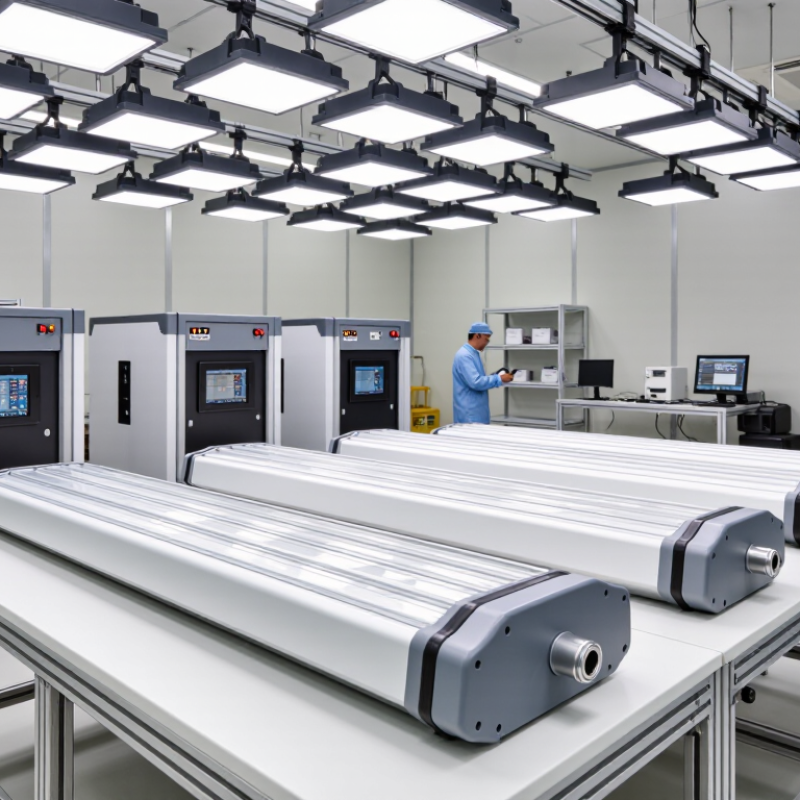
Tri-proof lights are sealed LED fixtures designed for demanding environments. “Tri-proof” usually refers to protection against dust, moisture, and impact. Many models carry IP65 or IP66 ratings, while impact resistance may reach IK08 or higher. These ratings matter more than the product name. Buyers should check independent test reports, operating temperatures, and warranty conditions before placing large orders. A sealed housing, strong clips, and reliable gaskets help prevent water and dust from reaching the electrical parts.
These lights are common in warehouses, parking garages, workshops, tunnels, and cold storage rooms. They also suit covered walkways, loading areas, food preparation zones, and agricultural buildings. In a warehouse, a wide beam can brighten tall aisles without creating harsh dark spots. In a parking garage, stable performance reduces frequent maintenance above vehicles. Cold rooms need fixtures rated for low temperatures, because ordinary LEDs may start slowly or lose output.
Global buyers should compare lumen output, power use, beam angle, color temperature, and emergency options. A higher wattage does not always produce better visibility. Poor spacing can create glare, even with an efficient fixture. This is a common planning mistake. Dusty sites may also need regular cleaning, because a dirty diffuser reduces useful light. Installation experience has taught many contractors to inspect seals after wiring, not only before delivery. The best choice depends on the environment, not simply on the lowest quoted price.
2026 Top Tri-Proof Light Manufacturers for Global Buyers
Key Criteria for Evaluating Tri-Proof Light Manufacturers
Choosing a tri-proof light manufacturer requires more than comparing catalog prices. Start with evidence from real production and independent testing. Ask for IP65 or IP66 reports, impact ratings, thermal data, and photometric files. A reliable supplier should explain test conditions clearly, not hide behind attractive specifications.
Inspect the housing, gasket, clips, terminals, and cable entry. These small parts often decide whether a fixture survives dust, moisture, and vibration. Review LED efficacy, color consistency, power factor, flicker performance, and operating temperature. Request a sample from normal production, not a specially prepared unit. Then compare it with the approved sample.
Factory experience matters. Check quality-control procedures, incoming material checks, aging tests, and final inspections. Warranty terms should define failure rates, response times, and replacement responsibilities. Certification documents must match the exact model, driver, and electrical configuration. Generic files create unnecessary risk. So do traceability checks.
A factory audit can reveal more than a polished website. Look at assembly lines, test equipment, and packaging methods. Still, no evaluation is perfect. Even experienced buyers may overlook batch variation or installation conditions. I would record every concern before placing a larger order. Clear communication, stable documentation, and honest answers usually indicate a manufacturer worth deeper consideration.
Leading Tri-Proof Light Manufacturers for Global Buyers in 2026 must prove more than attractive specifications. They need stable performance in warehouses, tunnels, food-processing areas, and covered outdoor spaces. The International Energy Agency reports that lighting uses roughly 5% of global electricity. Efficient LED systems can therefore support measurable operating savings.
Reliable manufacturers usually provide IP65 or IP66 protection, IK08 impact resistance, and documented thermal testing. These details matter when dust, water spray, and vibration are unavoidable. The U.S. Department of Energy states that LED lighting can use at least 75% less energy than incandescent lighting. It also lasts much longer under suitable conditions. However, a tri-proof fixture may fail early if its driver, seals, or heat management is weak.
Global buyers should request LM-80 and TM-21 data, photometric files, surge protection details, and IEC 60598 compliance evidence. A serious supplier should explain lumen maintenance at 25°C and higher ambient temperatures. That conversation reveals practical experience. Market reports from Grand View Research and MarketsandMarkets continue to identify industrial LED adoption as a growth area, driven by efficiency upgrades and stricter facility requirements. Yet forecasts are not purchasing proof. Samples should be tested under real installation conditions.
Ask for warranty terms, spare-part access, batch consistency, and independent laboratory reports. Check the cable glands closely. Small gaps become expensive problems. Some manufacturers publish impressive efficacy figures but omit operating temperature or power-factor data. That is a weakness worth challenging. The best 2026 suppliers combine transparent testing, adaptable designs, and dependable after-sales support for different regional environments.
For global buyers, product comparison should begin with working conditions, not catalogue wattage. Tri-proof luminaires serve warehouses, parking areas, workshops, and humid production zones. Compare power options, lumen output, beam angle, color temperature, and operating temperature. A 40-watt fitting may appear efficient, yet poor thermal design can reduce useful light and service life.
Check IP65, IP66, or IP67 ratings against the installation environment. IK08 or IK10 protection may suit locations exposed to tools or accidental impact. Request photometric files, thermal test data, flicker information, and emergency-lighting compatibility. Certifications also require careful review. Depending on the destination, buyers may need CE, UKCA, UL, ETL, RoHS, or market-specific electrical reports. A certificate should match the exact model, driver, and revision.
Customization can include housing length, lens diffusion, mounting clips, cable entry, connector type, dimming control, and sensor integration. Ask whether the manufacturer supports private labeling, sample approval, and traceable batch records.
Factory quality systems, such as ISO 9001, are useful, but they do not replace product testing. Request audit evidence. Ask for evidence.
Packaging and spare-driver availability also affect real project costs. No comparison is perfect. Some suppliers provide attractive samples but inconsistent production results.
A pilot order, aging test, and installation review can reveal weaknesses before a large shipment.
2026 Top Tri Proof Light Manufacturers for Global Buyers
Selecting a tri-proof light supplier in 2026 requires more than comparing unit prices. Start with the installation environment: cold storage, parking areas, food-processing rooms, or humid warehouses demand different thermal and sealing performance. Ask for test reports covering IP65 or IP66 protection, impact resistance, lumen maintenance, power factor, and operating temperature. Request the exact LED, driver, housing, and gasket specifications. Vague datasheets create expensive surprises.
Use samples before signing a volume order. Measure illuminance, color consistency, startup behavior, and surface temperature after several hours. Check the wiring method, mounting clips, emergency options, and cable glands on a real ceiling mock-up. A supplier should provide photometric files, production photos, quality-control records, and traceable batch information. Factory audits matter, but a short visit can miss process problems. Ask how rejected units are recorded and corrected. This is often overlooked.
Compare total sourcing risk, not only FOB cost. Review minimum order quantity, tooling charges, spare-part policy, warranty exclusions, payment terms, and realistic lead times. Confirm that regional electrical and environmental requirements are supported by current documentation. Independent certification can strengthen trust, but verify the certificate number and product model. Do not accept a copied report. A clear contract should define brightness tolerance, color tolerance, failure handling, and inspection rules. My own preference is a smaller pilot order, although it may slow the launch. That inconvenience is useful: weak suppliers usually reveal themselves before the warehouse is full.
When sourcing tri-proof lights, verify the exact IP rating required for the installation environment. Under IEC 60529, the first digit indicates protection against solid particles and the second digit indicates protection against water. IP65 is dust-tight and protected against water jets, IP66 is dust-tight and protected against powerful water jets, while IP67 additionally supports temporary immersion in water up to 1 metre for up to 30 minutes. These ratings should be confirmed through supplier test reports and product documentation.
They are sealed LED fixtures for dusty, damp, and impact-prone spaces. Their housing uses gaskets and strong clips. Ratings matter more than the name.
Common locations include warehouses, parking garages, workshops, tunnels, and cold rooms. Covered walkways and loading areas also suit them. Food and agricultural buildings may need them.
Look for IP65 or IP66 protection and IK08 impact resistance or higher. Confirm these ratings through independent reports. A copied document is not enough.
Compare lumen output, wattage, beam angle, color temperature, and emergency options. More watts do not always mean better visibility. Poor spacing can create glare.
Yes, when the fixture is rated for low temperatures. Ask for startup behavior and output data in cold conditions. Ordinary LEDs may start slowly.
Install samples on a ceiling mock-up. Measure illuminance, color consistency, startup time, and surface temperature after several hours. Small tests expose large weaknesses.
Request photometric files, thermal tests, power-factor data, warranty terms, and batch records. Check cable glands and spare-part access too. Details can disappear later.
Compare total sourcing risk, not only unit price. Review lead times, minimum orders, warranty exclusions, and inspection rules. A smaller pilot order may slow the launch, but it can reveal weak suppliers. That inconvenience is useful.
This guide introduces Tri Proof Light products, explaining their sealed, durable construction and suitability for demanding environments such as warehouses, factories, parking areas, tunnels, workshops, and commercial facilities. It outlines the main factors global buyers should consider when evaluating manufacturers in 2026, including product quality, luminous efficiency, protection ratings, thermal performance, service life, production capacity, testing procedures, and supply reliability.
The article also compares product configurations, certifications, installation methods, control options, and customization capabilities to help buyers understand the differences among available suppliers. It provides a practical sourcing framework covering technical requirements, project conditions, order quantities, communication, samples, lead times, packaging, warranty policies, and after-sales support. By balancing performance, compliance, flexibility, total cost, and long-term cooperation, buyers can select a dependable Tri Proof Light manufacturer that matches their application needs and international purchasing expectations.
